Filed under Next-generation broadband service, Rural Broadband Access by simonmackay on 11/04/2013 at 15:40
{no comments}
Article
thinkbroadband :: Vonage and Gigaclear in partnership deal
From the horse’s mouth
Gigaclear
Press Release
Vonage
UK company webpage
My Comments
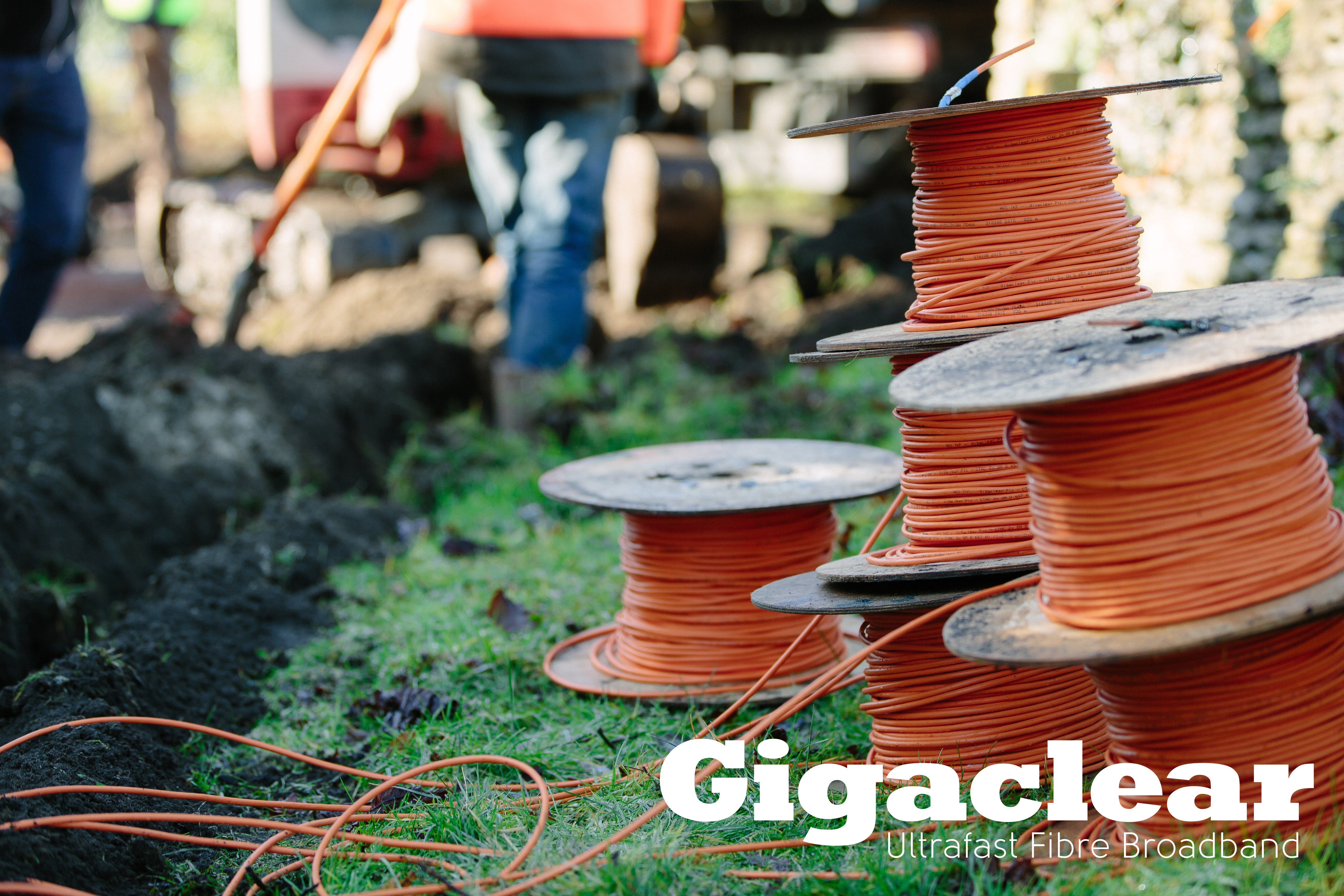
As you may already know, Gigaclear have been known for rolling out focused fibre-to-the-premises deployments to various Oxfordshire and Berkshire villages in the UK to enable them for next-generation broadband. A lot of these services are known to provide up to a gigabyte in upload and download capacity.
Now they have partnered with Vonage, a US-based over-the-top VoIP telephony provider to exploit this bandwidth for providing VoIP telephony. One would see this as a way to eliminate dependence on British Telecom for landline voice telephony for people who sign up to Gigaclear FTTP services.
Here, the main advantage would be for the new Vonage customers who are behind the Gigaclear services to avoid having to pay the £9.99 activation fee when they set up for VoIP service and will benefit from calling anywhere in the UK for £5.99 per month. As well, Vonage do sell a VoIP analogue-telephone adaptor that is set up for these services as part of the service so you can use that existing landline phone with your VoIP service.
But one could easily ask whether Gigaclear could resell the VoIP service on behalf of Vonage so that customers could buy the telephony and Internet as a package. Similarly, another question could be asked whether Gigaclear could also partner with an IPTV provider to resell pay-TV to the customers.
Print This Post
Filed under Rural Broadband Access by simonmackay on 27/03/2013 at 14:35
{no comments}
Article – From the horse’s mouth
Google
Google Europe Blog: Improving Internet access in Africa with ‘White Spaces’
My Comments
What is “white space”?
A term that we will hear a fair bit of with Internet services is “white space”. This is UHF or VHF radio spectrum that has been newly created as the result of a nation or region switching from an analogue TV service to a digital TV service, which is typically more spectrum-efficient.
How is this relevant
The use of “white space” is becoming very appealing for Internet in rural and remote areas due to the fact that the VHF and UHF frequencies have relatively longer wavelengths than the frequencies used for most wireless-broadband applications. This allows for a longer distance between the base station and remote stations which suits this kind of deployment.
Such setups will be established on the concept of the fixed-wireless broadband setup where the customer-premises equipment will be connected to a fixed antenna (aerial), typically a rooftop aerial.
A lot of the talk about these services relates to whether these setups should be worked on licensed spectrum or the newly-free spectrum be declared in a manner to allow unlicensed use for this application, in a similar vein to Wi-Fi wireless.
In a test that was undertaken in some parts of rural USA by Google, it was proven that white space could be used as a wireless last-mile backhaul without interfering with existing TV stations and other spectrum users. This was through the use of a database which identifies channels that are used that is indexed by GPS-driven geographic parameters. The base station equipment are equipped with a GPS receiver to determine their geographic location and this comes in to play during the commissioning stage in order to determine the useable channels. Of course, the customer-premises equipment would seek for the frequencies associated with services that exist in a similar vein to a cable modem.
The African deployment
After Google had their success with the Kansas City fibre-driven next-generation-broadband rollout when it came to establishing an Internet-service, they put forward the idea of setting up a trial “white-space” fixed-wireless setup in some of the remote parts of South Africa. The idea is to establish access to Internet for the schools that are in this area.
It was organised in partnership with the Independent Communications Authority of South Africa, equivalent to the US’s FCC or UK’s Ofcom communications authorities and is assisted by broadcasters and the industry.
What I would see of this is a chance for African nations to observe this trial and see how it can allow for decent broadband service in to their remote areas. This will include assessing what kind of power is needed at the customer’s end so as to determine whether this could work on a solar power setup that serves one building. Similarly, this could be assessed for establishing cellular-data backhauls for extending or improving access to Internet service via cost-effective wireless-broadband equipment in these areas.
Print This Post
Filed under Next-generation broadband service, Rural Broadband Access by simonmackay on 27/03/2013 at 13:19
{no comments}
Article
thinkbroadband :: Highlands and Islands in £146 million fibre boost
From the horse’s mouth
British Telecom
Press Release
My Comments
Another rural area in the United Kingdom is being enabled with real broadband. This time it is the Highlands and Islands region in Scotland.
The mighty Scots will have a fibre-optic infrastructure that will intend to pass at least 84% of homes and businesses in this area. The setup will be primarily of the FTTC (fibre-to-the-cabinet / fibre-to-the-curb) fibre-copper setup with some installations being FTTP (full fibre-to-the-premises) setups.
This £146m project is being primarily provisioned by BT but, like a lot of these projects, has a lot of public funding. There will be £19.4m pitched by BT and £12m coming from the Highlands and Islands Enterprise business group with balance being public money from BDUK (Broadband Delivery UK) and from Edinburgh.
This will be considered one of the most ambitious rural-Internet-enablement projects in the UK due to the geographical makeup of the are i.e. the hilly nature of the Highlands as well as the Scottish Islands separated by water. One of the main costs would be to run 19 undersea fibre links to the Scottish Islands that are in this district. As well, areas that are considered to be remote will be the target of a £2.5m innovation fund to get broadband in to them.
What I would see of this is that the Highlands and Islands project can he used as an example of deploying real next-generation broadband to areas that have a mixture of geographically-difficult terrains like mountains or islands.
Print This Post
Filed under Next-generation broadband service, Rural Broadband Access by simonmackay on 18/03/2013 at 14:30
{no comments}
Articles – French language
DegroupNews
Dordogne : le calendrier du très haut débit se précise – DegroupNews.com
L’Aquitaine se prépare au défi du très haut débit
My Comments
In France, there are greater plans to cover the Aquitaine region with next-generation broadband. This time, the Dordogne (24) département is now part of the blueprint to deliver this service through the region. Previously they have established the Lot-et-Garonne and Gironde départements as part of the effort. Initially the effort will be focused on the Gourdine and Bergerac population centres.
There has been work undertaken on coverage in the Bordeaux, Biarritz and Pau population centres with initial involvement from energy companies in that area.
Initial plans require the fibre trunks to be laid after 2015 and the work complete after 5 years.
France Télécom / Orange will be primarily behind the effort as far as the infrastructure is concerned. But a good question to raise is whether there will be local or regional public investment in the effort? This is although most rural-broadband-improvement / next-generation broadband efforts in the UK and France have a fair bit of public investment from local government.
Print This Post
Filed under Next-generation broadband service, Rural Broadband Access by simonmackay on 08/03/2013 at 13:07
{no comments}
Article
thinkbroadband :: Scilly Isles to benefit from fibre link and better broadband
From the horse’s mouth
Superfast Cornwall
Press Release
My Comments
Scilly Isles in Cornwall, United Kingdom is now to benefit from reliable real broadband thanks to a fibre-optic backhaul.
Previous, the inhabitants were serviced by a wireless link between Land’s End and the islands as their Internet backhaul. But reliability could be an issue due to the nature of radio links and this backhaul would not yield enough bandwidth for all the residents and businesses on those islands.
Here, the Superfast Cornwall initiative which facilitated this link made use of undersea “dark fibre” (unused fibre-optic links) that went out to the Atlantic Ocean to steer the Internet link to these islands. They intend to have the service up and running by 2014.
Like a lot of these broadband-improvement efforts, this one is a public-private partnership with the European Regional Development Initiative and Cornwall Council putting their hands to the plough.
I also see this as opening up better pathos for people at the southern tip of England to benefit from the real fast broadband, whether you work or retire there. It could also allow for some form of financial regeneration to occur in these areas.
Print This Post
Filed under Next-generation broadband service, Rural Broadband Access by simonmackay on 01/03/2013 at 19:11
{no comments}
Article – French language
ZEOP apporte la fibre optique à La Réunion – DegroupNews.com
My Comments
Previously, I had written an article about La Réunion, one of France’s “Départements Outre Mer” colonies having to deal with the issue of costly Internet access on that island.
Now there is action afoot to set up a next-generation broadband network on this island near Madagascar. ZEOP, who is an ISP that services this colony has put up the idea of a fibre-optic network being set up via their “Réunicable” subsidiary.
They will initially work on Saint Gilles which is their main economic centre due to the existence of a popular seaside resort with the work starting in April 2013. The goal is to connect 11000 premises to the network but I am not sure whether this effort is the same “fibre-to-the-node” deployment with a coaxial run to the subscriber as has been set up by Réunicable for the Pont D’Yves and Bras de Ponth dual-play services.
There will be an expectation that ZEOP /Réunicable shares the infrastructure with competing retail carriers and providers in that territory as has been mandated in the French mainland. But ZEOP want to run their retail service as a triple-play €49.90 / month with included telephone calls to landlines within La Réunion, to France and 60 other international destinations; 50 TV channels and an Internet service of 35Mbps download / 2Mbps upload bandwidth.
Of course, as I have mentioned in the previous coverage on this Département Outre-Mer, there is the issue of increasing the bandwidth that the island has to the rest of the Internet world. This could be about making La Réunion become a link between Africa and other European and Asian territories through the use of more satellite and submarine cable uplinks.
As well, I would like to see ZEOP look at other technologies that can do the job better, for better value in this island like use of VDSL2 for the copper run or full fibre-to-the-premises.
Print This Post
Filed under Next-generation broadband service, Rural Broadband Access by simonmackay on 28/02/2013 at 16:13
{no comments}
Article
thinkbroadband :: Frilford Oxfordshire to benefit from 1Gbps FTTH from Gigaclear
From the horse’s mouth
Gigaclear
Project Announcement Page
My Comments
Regular readers and subscribers of HomeNetworking01.info have noticed me covering Gigaclear’s activities in bring real next-generation broadband to the Berkshire and Oxfordshire rural communities in the UK.
Now Frilford and the neighbouring communities of Frilford Heath and Cothill are to benefit from this same technology. This is the same business-friendly service with 1Gbps upstream and downstream. Again this is a short drive (in an MG) west of Abingdon, like Fyfield and Tubney. This is another example of the villages and hamlets that exist close to a major town of employment “cottoning on to” the full business-grade broadband at the door in order to facilitate telecommuting for the businesses in that towm.
What I also like about this is that people who want the “tree-change” from Abingdon can value this option yet have access to the real broadband whether they still work or are considering retiring or setting up that small business.
Of course, like other Gigaclear services, this will primarily be a data-only service which will mean that people who want integrated telephony or TV service will have to source these services from “over-the-top” providers.
It is of course another example of pro-active thinking when it comes to bringing real broadband to rural, regional and peri-urban areas, and allowing these areas to become more “switched on”.
Print This Post
Filed under Next-generation broadband service, Rural Broadband Access by simonmackay on 23/02/2013 at 18:38
{no comments}
Article
thinkbroadband :: Bangor starts the ball rolling for Superfast Wales
From the horse’s mouth
Superfast Cymru
My Comments
Wales is to be expecting a rollout of next-generation broadband, initially in the Bangor area. The article cited the establishment of fibre-to-the-cabinet infrastructure in Bangor’s High Street with one of the fibre-copper cabinets being deployed there. At the moment, the service isn’t active at that point but I would like to see the service come alive with customers connected to it very soon.
The next-generation service will be based on fibre-to-the-cabinet technology with the option of on-demand fibre-to-the-premises upgrade. Most likely the copper link would be based on VDSL2 technology. This is meant to lift the average broadband speed in Wales beyond 9Mbps.
There is GBP£425 million invested in this broadband project with the estimated rollout between now and end of 2015. There will be some focus on identified “Enterprise Zones” and “Local Growth Zones” where government wants to help stimulate economic activity or population growth.
Of course, like most rural-broadband or next-generation-broadband projects, there will be some public-sector investment. In this case, the funds will come from European Union, UK and Wales governments.
The question about rural broadband will be based on what kind of engineering conditions are needed to determine what kind of technology would be used to supply the broadband. In a lot of areas in the UK where there are estates with clusters of closely-located properties, they should look at using the FTTC technology to plant the cabinets in the estates and close to the houses rather than placing them outside the estates.
It is also worth knowing that BT are the infrastructure providers but there is importance being placed on people having their choice of retail Internet service from different retail Internet providers.
Print This Post
Filed under Next-generation broadband service, Rural Broadband Access by simonmackay on 14/02/2013 at 12:15
{no comments}
Article
thinkbroadband :: Fibre broadband coming to Overbury and Conderton
My Comments
Another rural area in the UK has become “switched on” with next-generation broadband. This time, it’s the Overbury Estate in the Cotswolds. This area, which encompasses Overbury & Conderston has been known to be up-to-date and to be the first to come with running water, power and telephone service.
Here, it is being equipped with point-to-point Gigabit fibre broadband which has been said to be the envy of most areas around the world. This is where each customer who has their own fibre-optic run has the full bandwidth of their broadband service to their home network. It is like what happens with the Ethernet switches which provide the full bandwidth to the Ethernet sockets.
Like other “next-generation” broadband rollouts that have been occurring across the UK and Europe, this has allowed the online benefits of city life yet also have the peaceable and community-driven benefits of rural life.
One addition that has been factored in to this rollout is a “drop-in” hub for ad-hoc access to broadband by villagers, business, craftspeople, and community organisations. What I also like of this is that it can be used to help people who aren’t computer-literate get their hands wet with online life.
Let this be a chance to prove whether a “point-to-point” or “active” fibre-optic broadband service can really work and be a viable upgrade for existing next-generation broadband services.
Print This Post
Filed under Rural Broadband Access by simonmackay on 07/02/2013 at 14:46
{no comments}
Article
NBN wireless, satellite speeds to double
From the horse’s mouth
NBN Corporation
Press Release
My Comments
Rural Internet in Australia is to get a shot in the arm with the National Broadband Network to double the bandwidth available for the fixed-wireless and satellite rural services. This is through a technical improvement that is being made available for the satellite
The quoted improvements are from an initial 12 Mbps download and 1 Mbps upload to 25 Mbps download 5 Mbps upload. The NBN spokesman was even saying that the speeds would be better than the current ADSL2 copper deployments in urban areas. I would see this as yielding some real bandwidth for today’s requirements, especially catering for teleworking, small business and farming requirements as well as families separated by distance due to people heading for the country.
An issue to raise is how much of this bandwidth would be shared amongst the rural households and this could become an issue when neighbourhoods become more dense which can affect the the rural areas as people move to these areas. Personally, I would like to see some of the denser areas like small towns be able to consider the fibre-optic technology. On the other hand, the NBN fixed-wireless technology could support a “master-antenna” setup for those dense neighbourhoods that are at risk of experiencing reception difficulties due to topographical constraints.
At least this is the right step towards real Internet for people who live in the rural and remote areas in Australia.
Print This Post
Page 1 of 812345»...Last »