Tag: Amazon

Amazon positions Alexa as the landline phone replacement

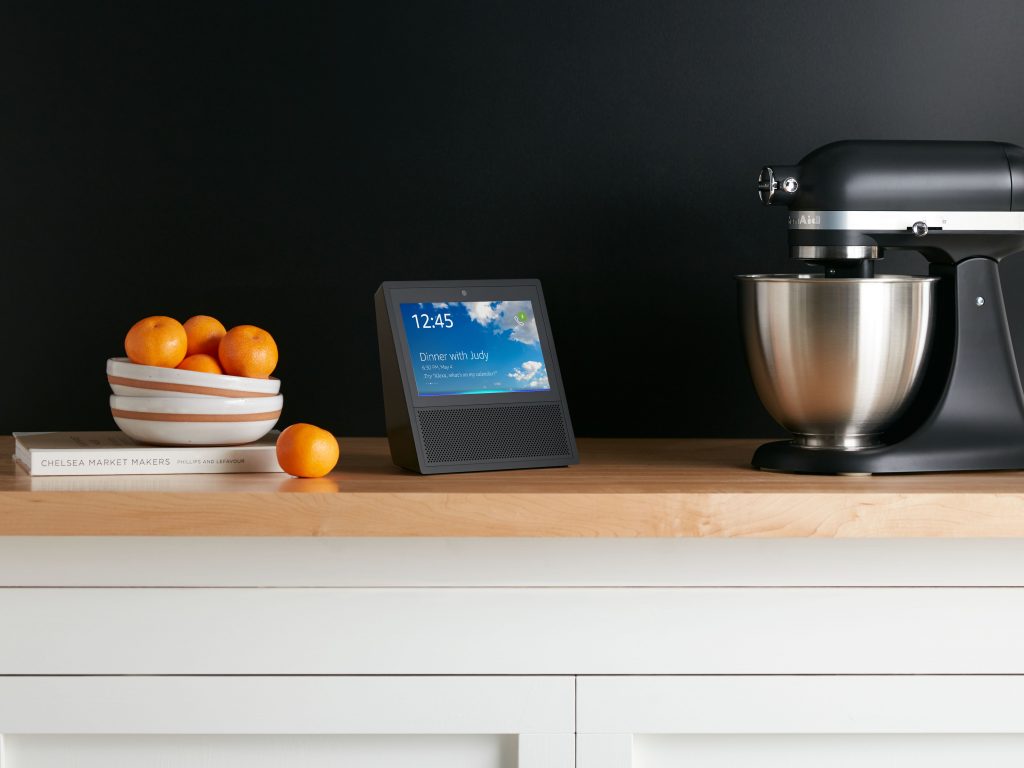
Articles Amazon Echo Show in kitchen press picture courtesy of Amazon
Echo Show

Amazon officially unveils touchscreen Echo Show | The Verge

Amazon launches Echo Show smart speaker with touchscreen and video calling | The Guardian

Alexa Calling And Messaging

Amazon now lets you make hands-free calls on all Alexa devices | Mashable

Amazon enables free calls and messages on all Echo devices with Alexa Calling | TechCrunch

From the horse’s mouth

Amazon

Product Pages

Echo Show

Alexa Calling And Messaging

My Comments

Amazon is treading in hot water here by taking the Alexa voice-driven home assistant platform further as an IP-telephony platform.

This has come about with the arrival of the Echo Show videophone which is equipped with a 7” colour LCD touchscreen. For its audio, it is equipped with a pair of Dolby-optimised speakers and an eight-microphone array.
Amazon Echo on kitchen bench press photo courtesy of Amazon USA

The Amazon Echo with the Alexa platform now expected to be an IP telephone

The video functionality allows it to be an IP videophone that is part of the Alexa Calling And Messaging IP-telephony platform but be able to show Daily Flash news reports which I would see as being similar to those “newsbreaks” you see on TV. There is also the ability to run YouTube videos including those many cat videos, but Amazon is adding to the Alexa API the ability for any of the Skills to show visual information on the screen when you summon her. It can also show vision from network security cameras that are compatible with the Amazon Alexa ecosystem.

But the driver feature behind this device is that Alexa platform is running its own IP-telephony system that is driven by your voice. Here, you can place free calls or send voice messages to others who have any Amazon Echo device or the Alexa iOS or Android mobile-platform app, with the ability to place videocalls between Amazon Echo Show devices. There is a “Drop In” functionality where you can speak through to another Alexa-platform subscriber during a time window that the subscriber specifies without the subscriber doing anything to answer the call.

Social networks and mobile messaging

Amazon to become part of this crowded space of IP-messaging and social networking platforms

This service is another IP telephony platform that is competing with Skype, Viber, Facebook Messenger, Apple iMessage/Facetime and others. Here, I see this as the start of a highly-crowded field where your smartphone will end up with many IP-telephony apps and you will have to decide which one to use to call your friends.

Some of the computer press also see it as a virtual landline telephone which may be seen as superfluous in the iPhone age. But there is a reality where these services are seen as a “catch-all” connection for a household or business. Similarly, a significant number of the older generation of telephone users place importance on these services due to these people relying on them for most of their lives. I also see it as being similar to various “smart landline telephone” efforts like the Telstra T-Hub and the Archos 35 Smart Home Phone, something that telcos are pushing as part of offering multiple-play consumer telecommunications services.

Using the common household phone

But do we expect Amazon Echo to serve a similar role to the traditional household telephone

What Amazon could do is either use one of the established over-the-top IP-telephony services for their Alexa Calling And Messaging service and say that it is powered by that platform. Or they could offer “gateway functionality” to one or more of these platforms so users can call people who are on these platforms for free. It would allow for a consolidated user experience for people who have contacts existing across one or more platforms. Similarly, Amazon could provide an on-ramp that telcos can exploit to allow Alexa users to place calls to landline or mobile telephony users including leaving messages on the telephony-service users’ voicemail services.

It is showing that a crowded marketplace is starting to exist for over-the-top IP-telephony services with customers having to place themselves on multiple IP-telephony platforms to be able to be reached in this manner.
Keeping the download-to-own music market alive

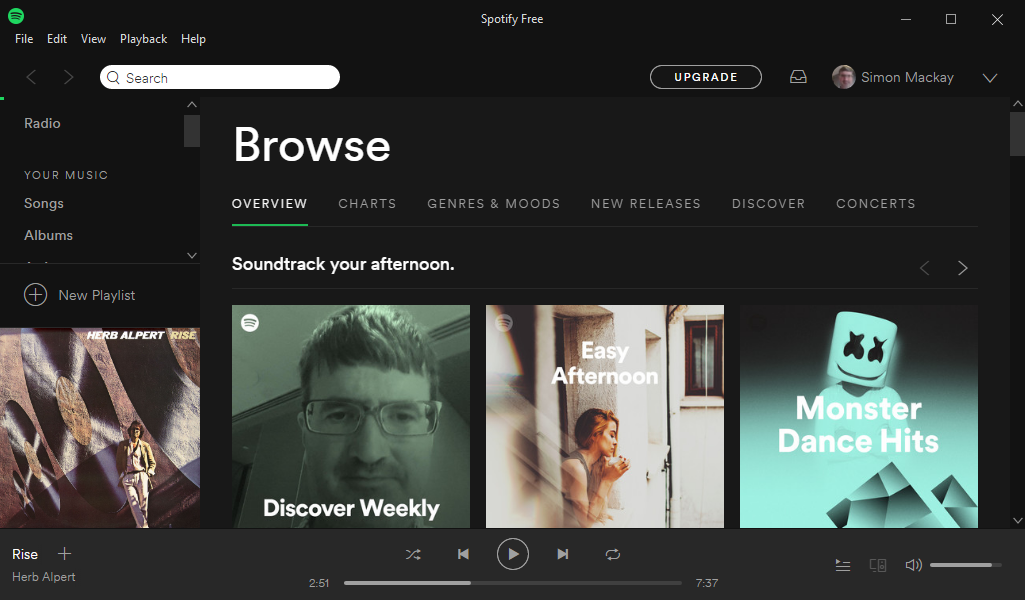
A lot of Millenials are preferring to use Spotify or similar “online jukeboxes” as their main music source, having the music play out of a wireless speaker or a network-capable audio system that supports these services.

What are these online jukeboxes?

Spotify

Spotify – the preferred only music source for many Millenials but can be used as a music discovery tool

These “online-jukebox” music services all work work primarily on a subscription basis where you don’t effectively own your music library, rather you stream down the music from these services after you pay a nominal amount per month or year to use these services. Some of them offer a free ad-supported variant of their music service, usually as an on-ramp to the main subscription-funded service.

But some of us, like myself, use the above-mentioned “online jukeboxes” more as a music-discovery tool so we can identify musical content that can fit in to our library. Examples of this include playing playlists that convey particular musical styles or moods, or discovering and “trying out” artists, albums and tracks that pique our interests.It includes situations where a company may offer a branded playlist with songs that represent what they are about.

In my case, I showed some interest in one of the “yacht-rock” playlists on Spotify and there had been a few songs that piqued my interest, some of which would be hard to find on CD in Australia. What I had done was to visit one of the transactional download-to-own music stores that is run as part of a platform’s app store and subsequently bought these songs as audio files that I could download. This meant I could add them as part of a personal playlist that existed on a microSD card as well as on a NAS that is available on the home network.

How can the “download-to-own” music services fit in

iTunes Store

iTunes – still going strong as a download-to-own music store

The way some of us add this content to our libraries is through a transaction-based “download-to-own” service like iTunes or Amazon Music. Increasingly most of the app stores associated with particular regular-computing or mobile platforms like the Windows Store and the Google Play Store are adding “download-to-own” music as part of their offerings.

Such services allow us to buy songs or albums as common media files to download to our computers or NAS drives, with a similar experience to buying the physical media where we effectively own it, but in a digital form. There used to be many of these services before the subscription-based music-streaming services took over the online music marketplace.

Microsoft Store - Muisc

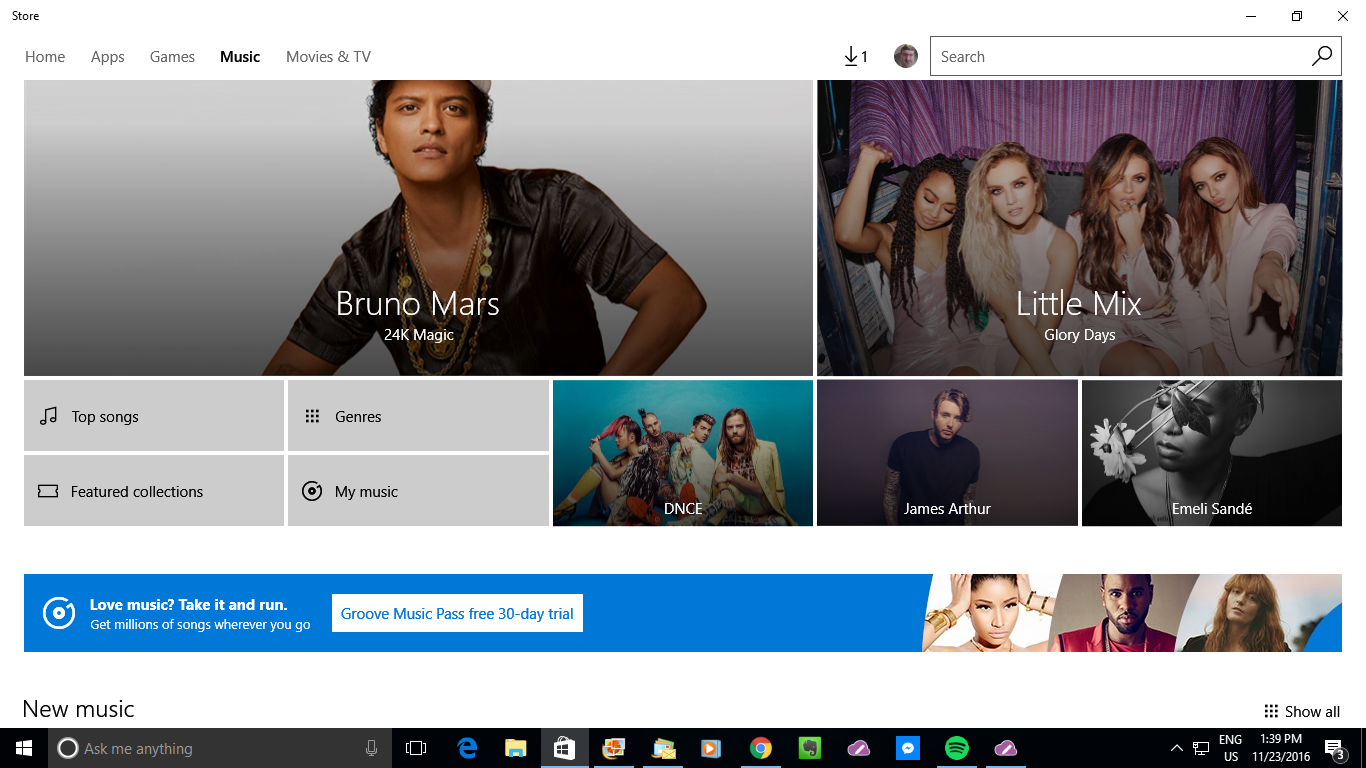
Microsoft Store -Microsoft’s latest entry in to the “download-to-own” scene, providing music as MP3 files

What used to be an advantage was for these services to sell most of the songs as single tracks rather than require the user to buy a complete album. This was very similar to the era of the 7” 45rpm single where people could buy these records for cheap if they are after a particular song. This appealed to people who were buying to build up playlists of particular songs typically to set a particular mood.

There is also the value that you are not dependent on whether the content you like is still available at the online streaming music service or whether you have burnt up your mobile download allowance by streaming your music while on the road. Some of the online music services provide for offline listening but the files that are stored are kept in a proprietary form that can’t be readily played with anything other than the software provided by the online service.

Viable niches that these services can answer

Some of these services still exist but could be taken further to support a range of viable niches whether in the form of content types or audio-reproduction standards.

Answering new and upcoming talent

The typical answer to this issue is to offer these services as an “on-ramp” for upcoming talent like new musicians, basement bands and DJs. Here, these artists who typically have a handful of content but aren’t discovered could be able to sell their content through these services. They offer a simplified “on-ramp” for this kind of talent and may even provide the promotion that it needs to be exposed.

You may find that some of these “download-to-own” music stores will have their “artist and repertoire” teams who “suss out” local gigs, buskers and community radio to hunt down the new talent whose material they can sell.

Supplying particular kinds of content

To the same extent, there are some suppliers who sell particular kinds of “download-to-own” music that suit particular tastes.

Beatport

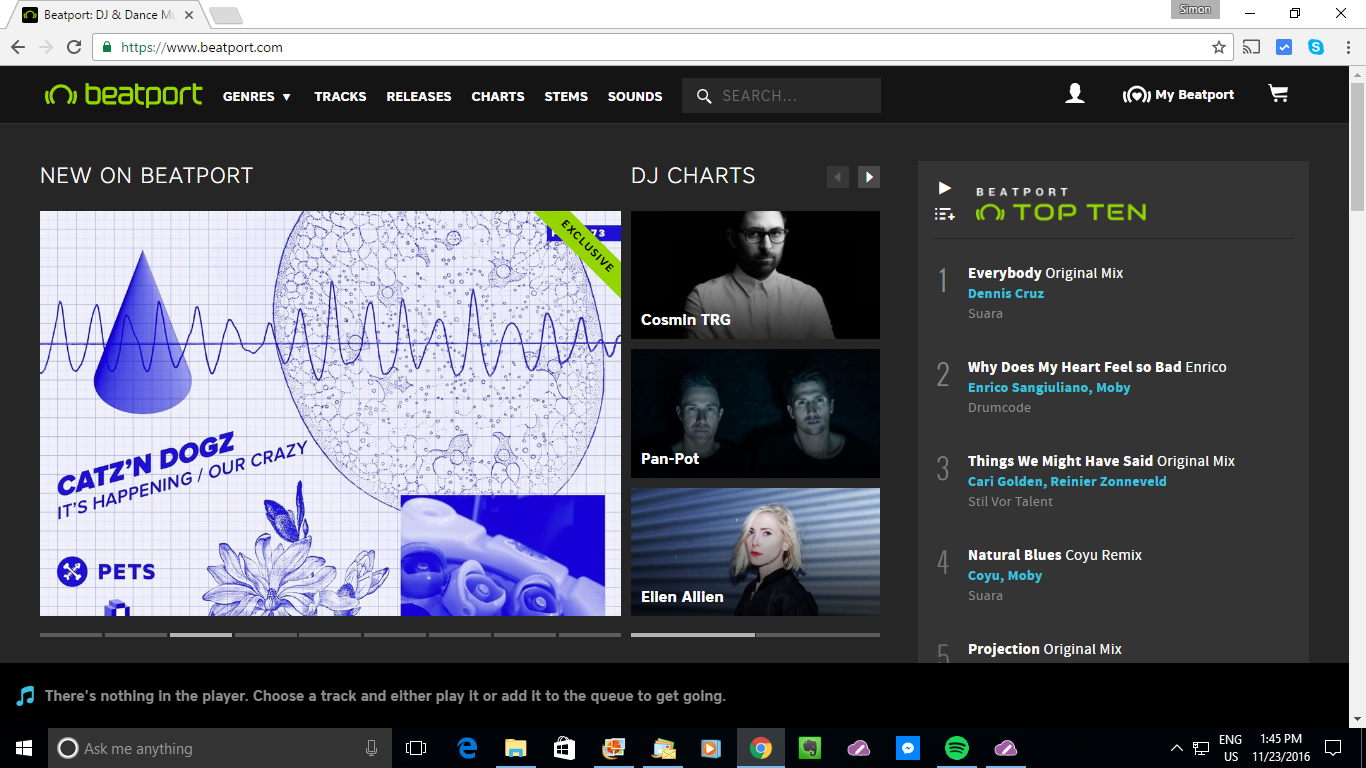
Beatport – the dance-music download-to-own store

One of these is Beatport who sell electronic dance music to DJs and those of us who like that kind of music. This is similar to how some dance-music record stores like Central Station Records in Australia existed, catering to this user class and were pulling out the stops to hunt down the latest beats.

Sometimes some record labels that specialise in particular kinds of content may run their own shopfront instead of or alongside the traditional distribution channels. It may be seen as a way to bypass import controls that some distributors and retailers value highly for controlling what is available in certain markets. As well, this approach effectively provides direct access to the talent the labels represent.

High-quality file-based audio

Another way would be that file types that represent high-quality audio could be available either as a standard or premium option. This can appeal for those of us who value high-quality audio or regularly use a top-notch hi-fi system. As well, there could be the ability to obtain high-quality masterings of the recordings that are available, including the ability to obtain a version prepared with or without high dynamic range.

Here, such recordings can be seen as a premium option for those of us who want something that is more special than what the online streaming services offer. An example of this has been the PonoMusic store that Neil Young started out with but is undergoing some renovation.

How can they complement Spotify and co?

But to continue making sure that these services maintain popular appeal, “download-to-own” music stores that want to cover a large market base have to have access to the current and back catalogue offered by most, if not all, of the major labels across the world. This includes being able to sell these recordings in to other countries, which may raise concern with music labels who don’t like the concept of parallel-importing of content in to other markets.

Similarly, they could partner with the likes of Spotify to offer the recordings that these subscription-based “online jukeboxes” provide for playback as a premium download-to-own option. For example, a media-management program that works with a “download-to-own” store and one of the “online jukeboxes” could offer a “buy this playlist offline” function where you can effectively buy your own copy of a playlist. Here, it would check which of the songs are downloaded or “ripped” from your CDs, then allow you to buy the remainder of the playlist from the “download-to-own” stores.

Conclusion

What has to happen is that, like the way radio and packaged pre-recorded music complemented each other, the download-to-own music services and the “online jukeboxes” of the Spotify kind need to be positioned in a manner to complement each other in the file-based music world.