
Tag: DVB-I

Use of DVB-I and similar technologies to provide radio and TV over Internet-based infrastructure
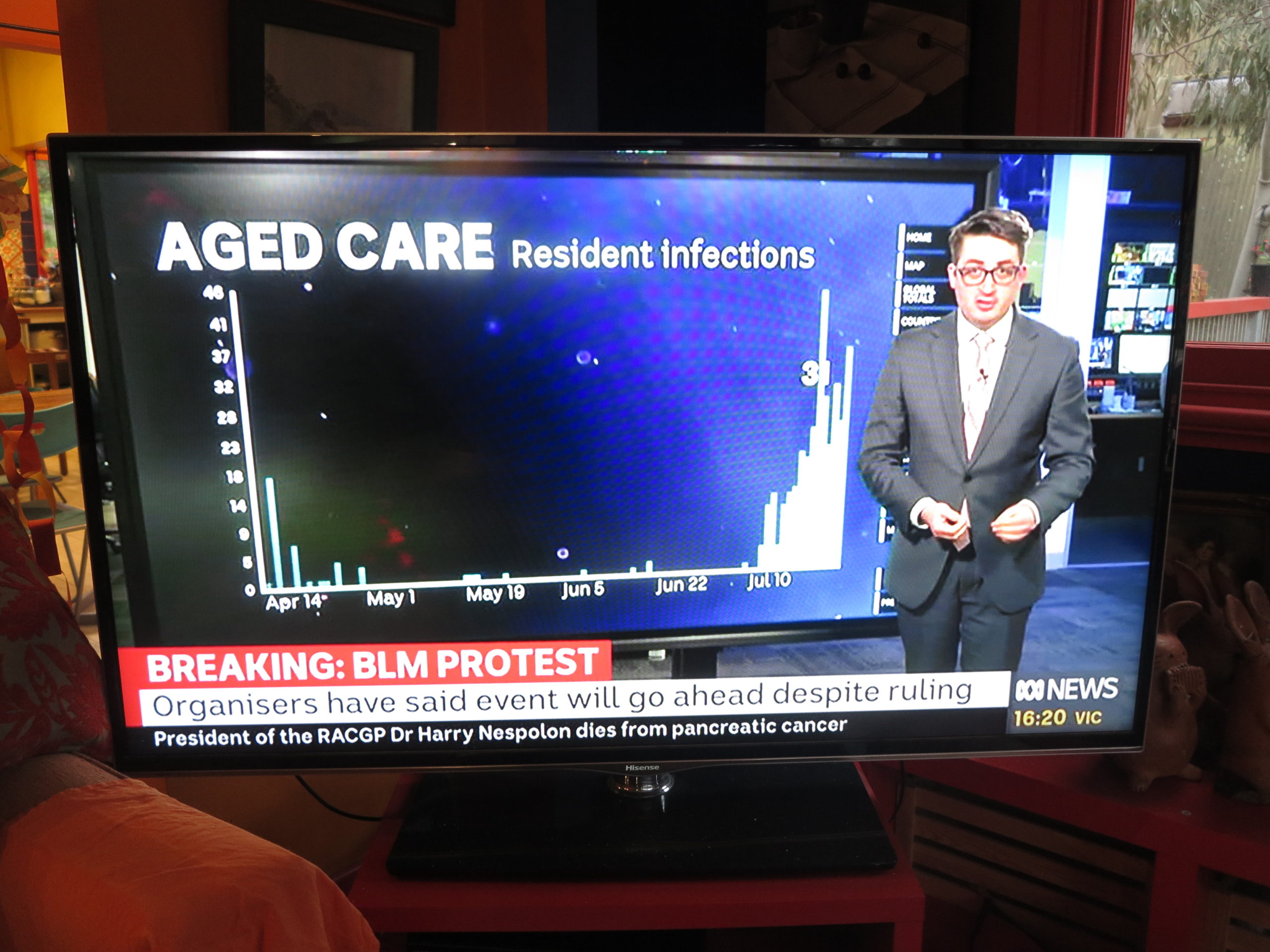
ABC News 24 coronavirus coverage

Traditional TV and radio could be delivered via the same means as the Internet

A direction that we are expecting to see for broadcast radio and TV technology is to stream it via Internet-based technologies but assure users of a similar experience to how they have received content delivered this way.

It is about being able to use the agile wired and wireless Internet technologies like 5G mobile broadband, fibre-to-the-premises, fixed-wireless broadband; and Ethernet and Wi-Fi wireless local area networks to deliver this kind of content.

What is the goal here

The goal here is to provide traditional broadcast radio and TV service through wired or wireless broadband-service-delivery infrastructure in addition to or in lieu of dedicated radio-frequency-based infrastructure.

The traditional radio-frequency approach uses specific RF technologies like FM, DAB+, DVB and ATSC to deliver audio or video content to radio and TV receivers. This can be terrestrial to a rooftop, indoor or set-attached antenna referred to in the UK and most Commonwealth countries as an aerial; via a cable system through a building, campus or community; or via a satellite where it is received using special antennas like satellite dishes.

The typical Internet-Protocol network used for Internet service uses different transport media, whether that be wired or wireless. It can be mobile broadband receivable using a mobile phone; a fixed setup like fibre-to-the-premises, fixed wireless or fibre-copper setups. As well, such networks typically include a local-area network covering a premises or building that is based on Ethernet, Wi-Fi wireless, HomePlug or G.Hn powerline, or similar technologies.

The desireable user experience
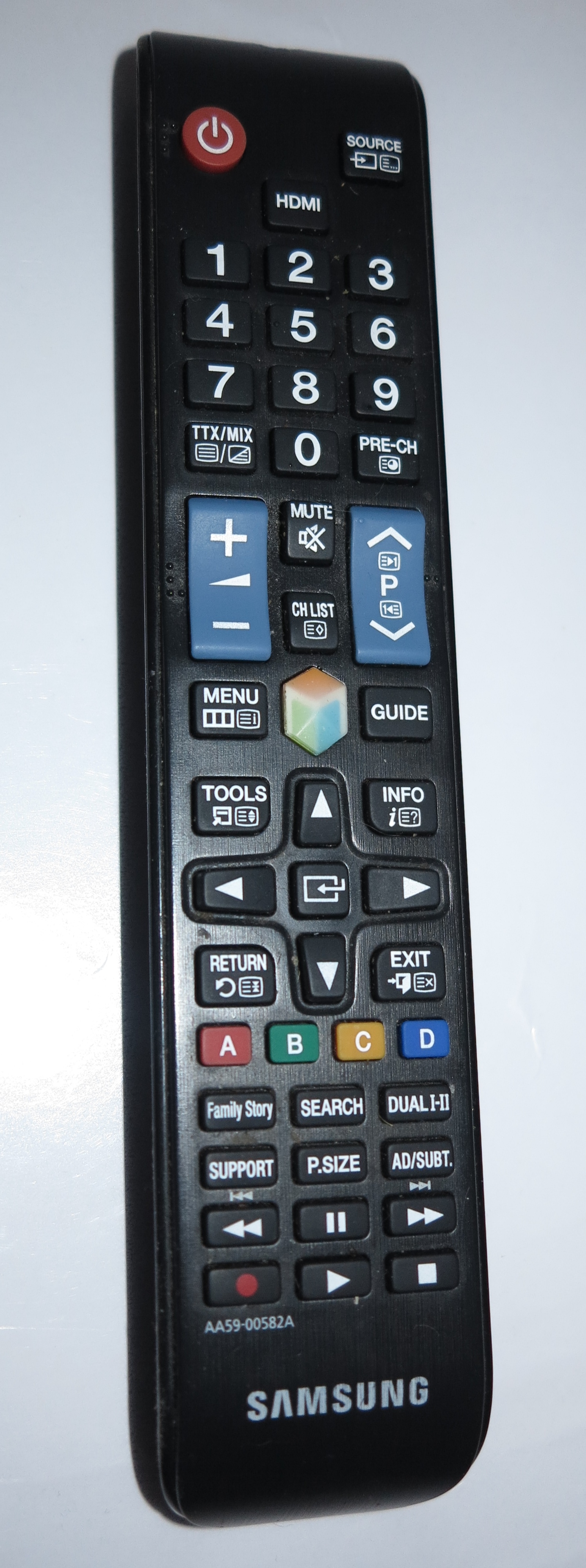
TV remote control

It will maintain the traditional remote-control experience like channel surfing

It also is about providing a basic setup and use experience equivalent to what is expected for receiving broadcast radio and TV service using digital RF technologies. This includes “scanning” the wavebands for stations to build up a station directory of what’s available locally as part of setting up the equipment; using up/down buttons to change between stations or channels; keying in “channel numbers” in to a keypad to select TV channels according to a traditional and easy-to-remember channel numbering approach; using a “last-channel” button to flip between two different programmes you are interested in; and allocating regularly-listened-to stations to preset buttons so you have them available at a moment’s notice.

This has been extended to a richer user experience for broadcast content in many ways. For TV, it has extended to a grid-like electronic programme guide which lists what is showing now or will be shown in the coming week on all of the channels so you can switch to a show that you like to watch or have that show recorded. For radio, it has been about showing more details about what you are listening to like the name of that song you are listening to for example. Even ideas like prioritising or recording the news or traffic announcements that matter or selecting content by type has also become another desireable part of the broadcast user experience.

Relevance of traditional linear broadcasting today

There are people who cast doubt on the relevance of traditional linear broadcast media and its associated experiences in this day and age.

This is brought about through the use of podcasts, Spotify-like audio streaming services, video-on-demand services and the like who can offer a wider choice of content than traditional broadcast media.

But some user classes and situations place value upon the traditional broadcast media experience. Firstly, Generation X and prior generations have grown up with broadcast media as part of their life thanks to affordable sets with a common user experience and an increasing number of stations or channels being available. Here, these users are often resorting to broadcast media for casual viewing and listening with a significant number of these users recording broadcast material to enjoy again on their own terms.

Then there is the reliance on traditional broadcast media for news and sport. This is due to the ability to receive up-to-date facts without needing to do much. Let’s not forget that some users rely on this media experience for discovery of content curated by someone else like staff at a TV channel or a radio station rather than an online service’s content-recommendation engine. Even the on-air talent is valued by a significant number of listeners or viewers as personalities in their own right because of how they present themselves on radio or TV.

Access without traditional radio-frequency infrastructure

TV aerial and satellite dish on house roof

DVB-I and allied technologies may reduce reliance on RF infrastructure like TV aerials or satellite dishes

One of these goals here is to allow access to traditional broadcast radio and TV without being dependent on particular radio-frequency infrastructure types and reception conditions. This can encompass someone to offer a linear broadcast service with all the trappings of that service but not needing to have access to RF-based broadcast technologies like a transmitter.

To some extent, it could be a method to use the likes of SpaceX Starlink or 5G mobile broadband to deliver radio and TV service to rural and remote areas. This could come in to its own where the goal is to provide the full complement of broadcasting services to these areas.

It also is encompassing a situation happening with cable-TV networks in some countries where these networks are being repurposed purely for cable-modem Internet service. As well, some neighbourhoods don’t take kindly to satellite dishes popping up on the roofs or walls of houses, seeing them as a blight. Here, multi-channel pay-TV operators have had to consider using Internet-based delivery methods to bring their services to potential customers without facing these risks.
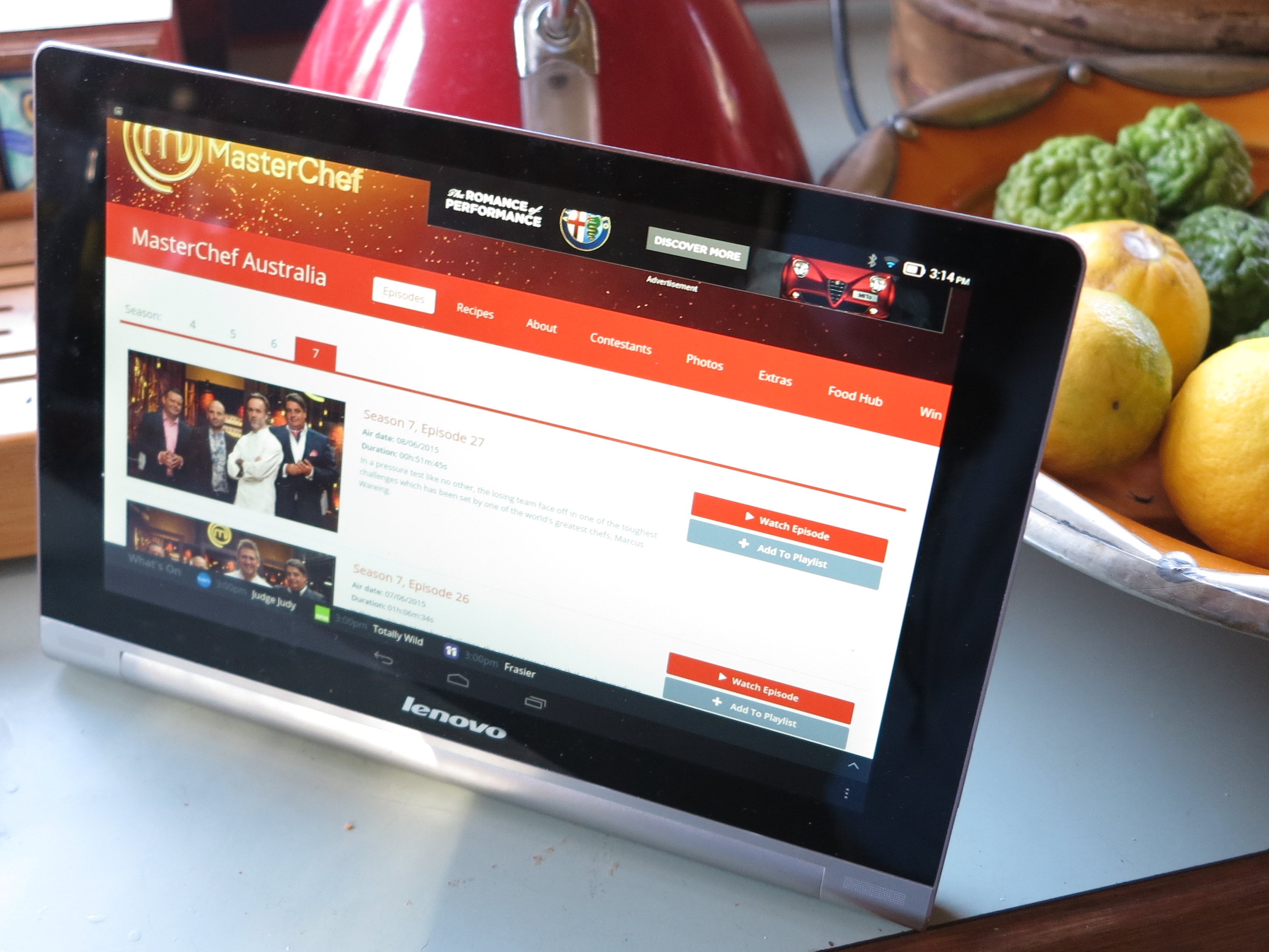
Lenovo Yoga Tablet 2 tablet

Or a mobile platform tablet could run software to pick up TV broadcasts via the Internet

Let’s not forget that IP-based data networks are being seen as a way to extend the reach of traditional broadcast services in to parts of a building that don’t have ready access to a reliable RF signal or traditional RF infrastructure. This may be due to it being seen as costly or otherwise prohibitive to extend a master-antenna TV setup to a particular area or to install a satellite dish, TV aerial or cable-TV connection to a particular house.

In the portable realm, it extends especially to smartphones or mobile-platform tablets even where these devices may have a broadcast-radio or TV tuner. But broadcast reception using these tuners only becomes useful if you plug a wired headset in to the mobile device’s headset jack, because of a long-standing design practice with Walkman-type personal radio devices where the headset cable is the device’s FM or DAB+ antenna. Here, the smartphone could use mobile broadband or Wi-Fi for broadcast-radio reception if you use its speaker or a Bluetooth headset to listen to the radio.

Complementing traditional radio infrastructure
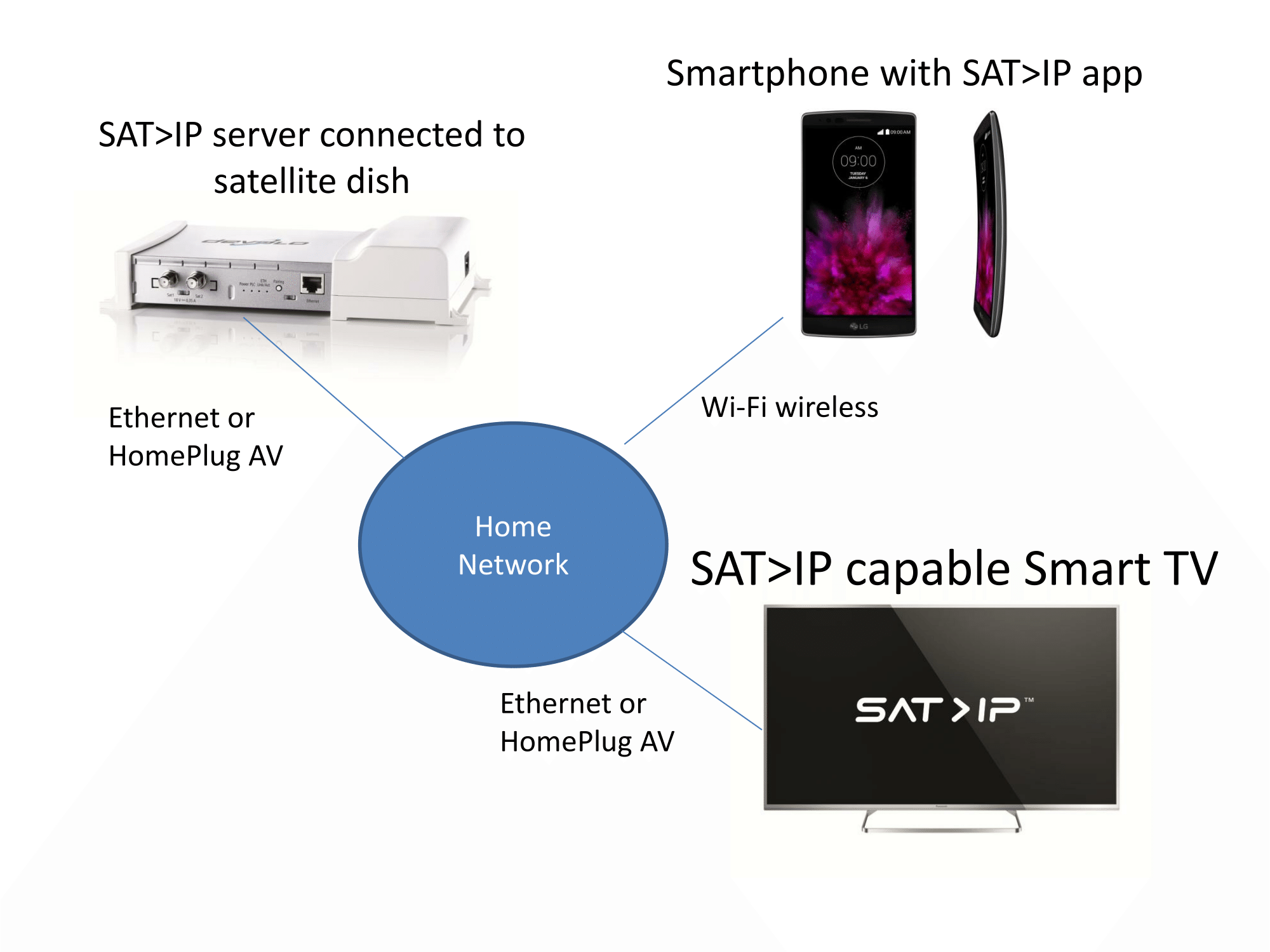
SAT>IP concept diagram

What SAT>IP is about with satellite TV – broadcast-LAN content distribution

In the same context, it is also being considered as a different approach to providing “broadcast-to-LAN” services where broadcast signals are received from radio infrastructure via a tuner-server device and streamed in to a local-area network. This could allow the client device to choose the best source available for a particular channel or station.

But even the “broadcast-to-LAN” approach can be improved upon by providing an equivalent user experience to a traditional RF-based broadcast setup. It would benefit buildings or campuses with a traditional aerial or satellite dish installed at the most optimum location but use Ethernet cabling, Wi-Fi wireless or similar technologies including a mixture of such technologies to distribute the broadcast signal around the development.

As well, some of these setups may be about mixing the traditional broadcast channels and IP-delivered content in to a form that can be received with that traditional broadcast user experience. Or it can be about seamlessly switching between a fully-Internet-delivered source and the broadcast stream provided by a broadcast-LAN server to the local network that is providing Internet service. This can cater towards broadcast-LAN setups based around devices that don’t have enough capacity to serve many broadcast streams.
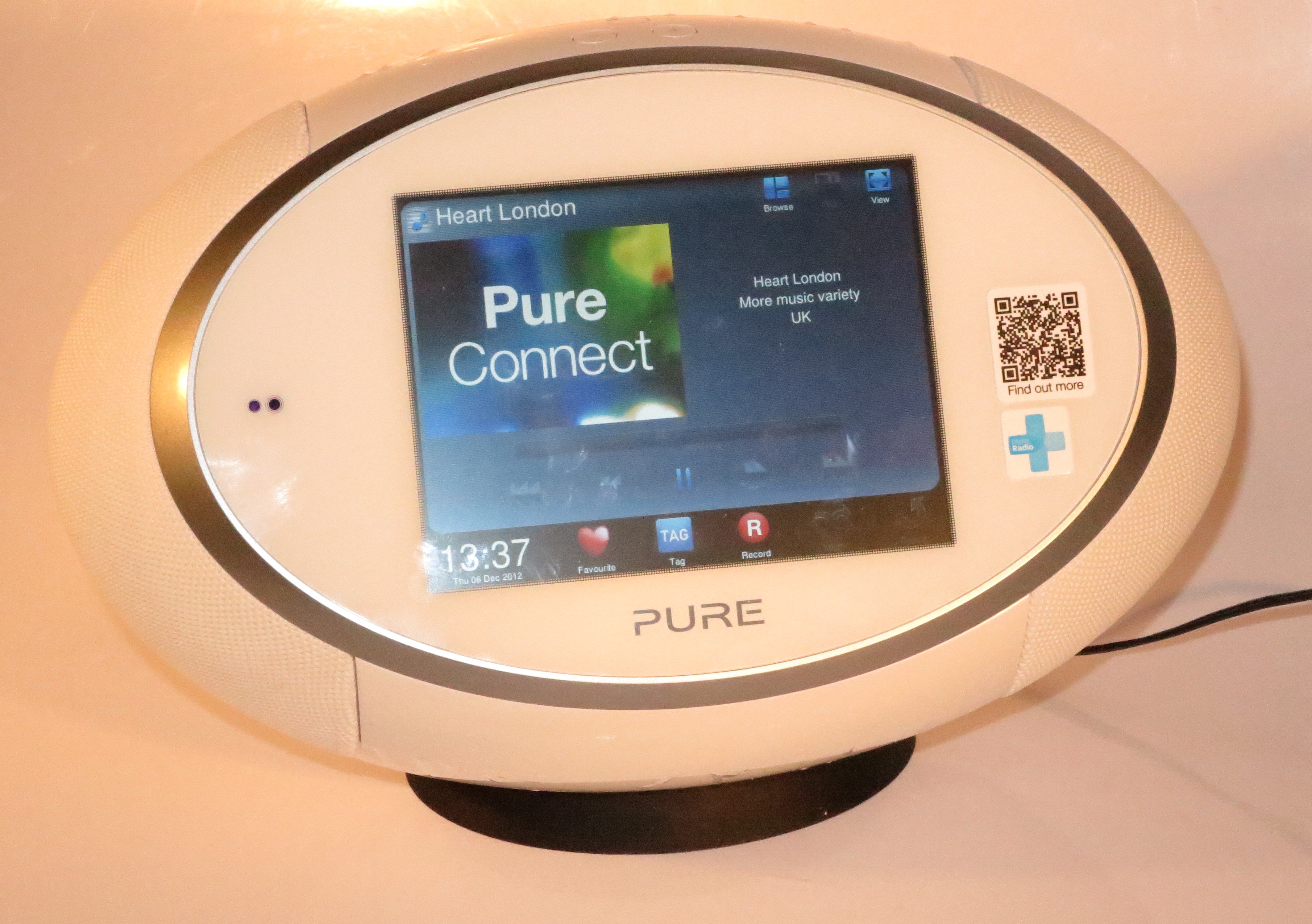
Pure Sensia 200D Connect Internet radio

Pure Sensia 200D Connect Internet radio – an example bringing broadcast radio via RF and Internet means

Even a radio or TV device could maintain a traditional user-experience while content is delivered over both traditional RF infrastructure and Internet-based infrastructure. This could range from managing a situation where an alternative content stream is offered via the Internet while the main content is offered via the station’s traditional RF means. Or it could be about independent broadcast content being broadcast without the need to have access to RF infrastructure or spectrum.

Similarly, some digital-broadcast operators are wanting to implement networks typically used for Internet service delivery as a backhaul between a broadcaster’s studios and the transmitter. Here, it is seen as a cost-effective approach due to a reduced need to create an expensive pure-play wired or wireless link to the transmitter. Rather they can rely on a business-grade Internet service with guaranteed service quality standards for this purpose.

Even a master-antenna system that is set up to provide a building’s or development’s occupants access to broadcast content via RF coaxial-cable infrastructure could benefit this way. This could be about repackaging broadcasters’ content from Internet-based links offered by the broadcasters in to a form deliverable over the system’s RF cable infrastructure rather than an antenna or satellite dish to bring radio and TV to that system. It could be also seen as a way to insert extra content for that development through this system such as a health TV channel for hospitals or a tourist-information TV channel for hotels.

How is this approach being taken

Here, a broadcast-ready linear content stream or a collection of such streams that would be normally packaged for a radio-frequency transport is repackaged for a data network working to IP-compliant standards. This can be done in addition to packaging that content stream for one or more radio-frequency transports.

This approach is built on the idea of the ISO OSI model of network architecture where top-level classes of protocols can work on many different bottom-level transports, with this concept being applied to broadcast radio and TV.

The IP-based network / Internet transport approach can allow for a minimal effort approach to repackaging the broadcast stream or stream collection to an RF transport. A use case that this would apply to is using a business-standard Internet service as a backhaul for delivering radio or TV service to multiple transmitters.

It is different from the Internet-radio or “TV via app” approach where there is a collection of broadcasters streamed via Internet means. But these setups rely primarily on online content directories operated by the broadcasters themselves or third parties like TuneIn Radio or Airable.net. These setups don’t typically offer broadcast-like user experiences like channel-surfing or traditional channel-number entry.

At the moment, the DVB Group who have effectively defined the standards for digital TV in Europe, Asia, most of Africa, and Oceania have worked on this approach through the use of DVB-I (previous coverage on this site) and allied standards for television. This is in addition to the DVB Home Broadcast (DVB-HB) standard released in February this year to build upon SAT-IP towards a standardised broadcast-to-LAN setup no matter the RF bearer.

Similarly, the EBU have worked on the HRADIO project to apply this concept to DAB+ digital radio used for radio services in Europe and Oceania at least.

Another advantage that is also being seen is the ability for someone to get “on the air” without needing to have access to radio-frequency spectrum or be accepted by a cable-TV or satellite-TV network. This may appeal to international broadcasters or to those offering niche content that isn’t accepted by the broadcast establishment of a country.

What is it also leading to

This is leading towards hybrid broadcast and broadband content-delivery approaches. That is where content from the same broadcaster is delivered by RF and Internet means with the end user using the same user experience to select the online or RF-broadcast content.

One use case is to gain access to supplementary content from that broadcast via the Internet no matter whether the viewer or listener enjoys the broadcaster through an RF-based means or through the Internet. This could be prior episodes of the same show or further information about a concept put forward in an editorial program or a product advertised on a commercial.

For radio, this would be about showing up-to-date station branding alongside show names and presenter images. If the show is informational, there would be rich visual information like maps, charts, bullet lists and the like to augment the spoken information.

If it is about music, you would see reference to the title and artist of what’s playing perhaps with album cover art and artist images. For classical music where people think primarily of a work composed by a particular composer, this may be about the composer and the work, perhaps with a reference to the currently-playing movement. Operas and other musical theatre may have the libretti being shown in real time to the performance.

In all music-related cases, there may be the ability to “find out more” on the music and who is behind it or even to buy a recording of that music, whether as physical media like an LP record or CD, or as a download-to-own file.

For TV content, this would be about a rich experience for sports, news, reality and similar shows. For example, the Seven Network created an improved interactive experience for the 2021 Tokyo Olympics and Paralympics by using 7Plus to provide direct access to particular sports types during the Games.  A true hybrid setup on equipment with a broadcast tuner would allow a user to select Channel 7 or 7Mate for standard broadcast feeds using the 7Plus user experience with the broadcast feeds supplied by the broadcast tuner or the Internet stream depending on the signal quality.

Issues to consider

There are issues that will be raised where broadcast radio and TV are delivered over Internet infrastructure with the goal of a broadcast-like user experience.

One of these is to assure users don’t pay extra costs for this kind of reception compared to delivery by RF-based means. Here, these Internet-based broadcast setups would have to be “zero-rated” so that users don’t incur data costs on metered Internet services like mobile broadband. Add to this a common issue with rural areas where Internet service quality wouldn’t be reliable enough to provide the same kind of user experience as traditional RF-based broadcast reception.

As well, broadband infrastructure providers would need to assure transparent access to Internet-based broadcast setups so that users have access to standard broadcasters without being dependent on service from particular retail ISPs or mobile carriers. It may also be about making sure that one can receive broadcast content with the broadcast user experience anywhere in a typical local network.

Another factor to be considered as far as DVB-I or similar technologies are concerned is whether this impacts on content providers’ liabilities regarding broadcast rights for music and sports content. Here, some sports leagues or music copyright collection bodies consider Internet-based distribution as different from traditional broadcast media and add extra requirements on this distribution approach.

It can be about availability of content beyond the broadcaster’s home country, in a manner to contravene a blackout requirement or to provide a competing source of availability to the one who has exclusive rights for that territory. It is also similar to “grey-importing” of music rather than acquiring it through official distribution channels, that also leads to bringing in content not normally available in a particular country.

These issues may be answered through a framework of various legal protections and universal-service obligations associated with providing free-to-air broadcast content. It would be driven more so by countries who have a strong public-service and/or commercial free-to-air broadcast lobby.

Conclusion

Internet-based technologies are effectively being seen as a way to extend the reach of or improve upon the broadcast-media experience without detracting from its familiar interaction approaches. This is thanks to research in to technologies that are about repackaging broadcast signals for an RF transport in a manner for Internet use.
Why is broadcast-LAN technology still relevant nowadays

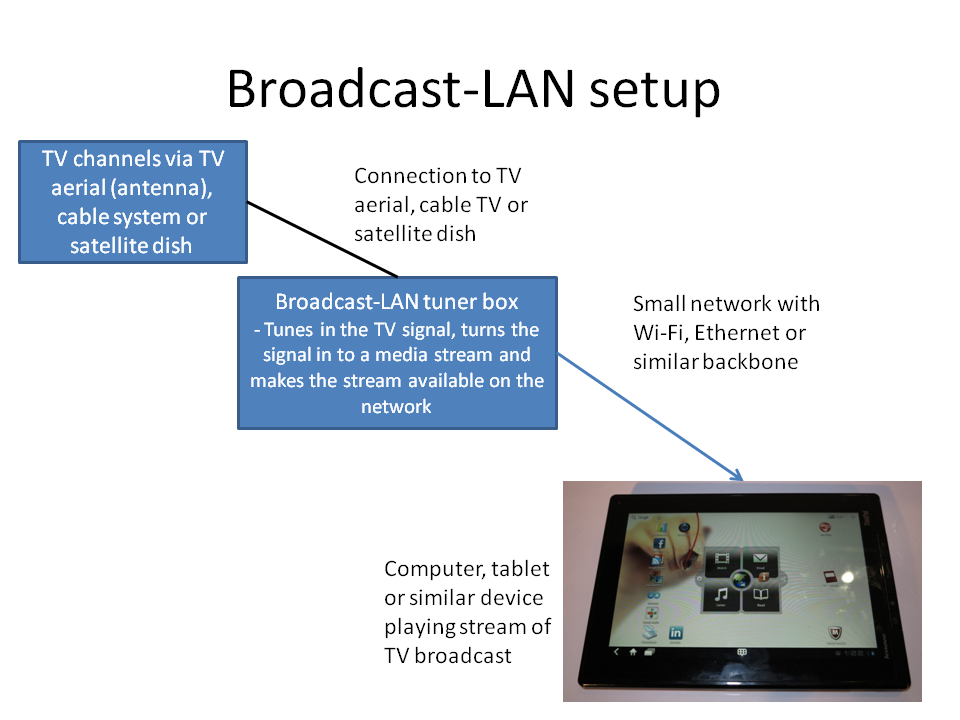
There is still in most areas of the world an undercurrent of interest regarding broadcast-LAN setups where a server box is connected to a TV-broadcast source and streams it across a small network to be picked up by various network-enabled devices. Such setups are used to facilitate access to traditional TV services from a tablet or laptop without the need to use a USB tuner module.

What is broadcast-LAN technology

Broadcast-LAN setup

A broadcast-LAN device like the HDHomeRun devices is a network server device that houses one or more radio or TV tuner front-ends and streams the audio or video content from radio or TV broadcasts over a local network. Client devices like computers, smartphones, tablets or smart TVs pull in these streams offered by the broadcast-LAN device to show on their screens or play through their speakers.

The broadcast-LAN device is typically connected to the RF source it is designed to work with like an aerial (antenna) for a traditional terrestrial radio / TV setup, a satellite dish for a satellite-TV service or a cable-TV infrastructure.

Some of these systems may even decrypt premium pay-TV content themselves through the use of a separately-installed hardware decryption module or integrated software. On the other hand, software in the client device may decrypt the premium content. Here, it is about providing access to pay-TV from multiple TV sets without the need for a set-top box.

Why is there interest in broadcast-LAN technology

One advantage is that there isn’t a need to run a connection from the RF source (cable TV, outdoor TV aerial, satellite dish) to each viewing device. It also obviates the need to use a dodgy indoor antenna such as “rabbit’s ears” as a substitute set-local connection. Nor is there the need to have a cable-TV or TV-aerial technician install cable-TV or TV-aerial sockets in each room you would likely to use an easily-transportable TV in, something that can easily be required when you use a room for a different purpose.

A broadcast-LAN setup provides a method of streaming TV over your network that is independent of your Internet service’s quality. It can then appeal to those of us who use a laptop, smartphone or tablet to watch TV content via our home network in lieu of using a small TV to watch broadcast content in secondary areas. This is because it can use your home network, especially if you use Wi-Fi wireless or HomePlug powerline technology, to transport the video streams from the broadcast-LAN device to the client devices.

As well, there isn’t the need to run multiple client apps or Web URLs to pick up the different broadcasts that are available to you. If you use the app or interface associated with the broadcast-LAN setup, you are able then to have a viewing experience similar to traditional TV viewing including the ability to channel surf like you always did.

Such technology plays in to the hands of people and societies who show a strong interest in traditional free-to-air TV content such as countries with a strong public-service broadcast scene like Europe or Australia, or the cord-cutting trend that is taking place among young people in America where people are dumping cable TV services and watching online content and local broadcast TV.

Some manufacturers have seen these facts as a point of innovation by integrating a broadcast-LAN server function in a TV-antenna device or component. For example a number of European satellite-dish component manufacturers have offered “IP LNB” devices which comprise a broadcast-LAN server device including multiple tuners in an LNB antenna device that mounts on to a satellite dish, with these devices being powered by Power-Over-Ethernet technology. Similarly, some indoor TV aerials and portable satellite dishes are being equipped with this functionality including, in some cases, DHCP and Wi-Fi access point functionality to allow for a transportable TV setup for your tablet or laptop.

Another factor being called out for broadcast-LAN by some vendors is the idea of using multiple broadcast-LAN server devices to increase the capacity of a TV-viewing setup based on this technology. This is through adding additional broadcast-LAN server devices to the same RF source in order to allow an increased number of TV channels from that source to be watched or recorded concurrently. On the other hand, adding an additional broadcast-LAN server device associated with different RF technology such as satellite TV to a home network equipped with an extant broadcast-LAN device could open up access to programming offered by that different technology.

Key drivers

SAT>IP concept diagram

What SAT>IP is about with satellite TV

For Europe, Asia and Oceania, the European technology-standards bodies have worked on standards that facilitate broadcast-LAN setups. These are SAT>IP, better referred to as SAT-IP, which links satellite-TV tuners and client hardware or software to an IP-based small local network; and DVB-I which is about integrating IP-based TV sources to the same setup and usage experience as regular RF-based TV sources. It has also led to both standards bodies to work towards using the same protocols no matter whether it’s cable, terrestrial or satellite.

Another driver that has been called out in the US market through the Obama presidency was the idea of access to cable TV across one’s household without the need to equip each TV with a set-top box provided by the cable-TV provider. But this idea has fallen apart thanks to a newer government that supports the status quo with the cable-TV providers.

It also had been pitched towards the cable and satellite TV industry as a way to save money on set-top-box inventory and allow, for example, the rental of one highly-capable multi-tuner PVR box that connects to the subscriber’s home network and the main TV. The household then connects secondary TVs and computing devices to this PVR box via the same home network to view live or recorded TV content offered by the pay-TV service on these devices.

Similarly, an increasing number of broadcast-LAN server devices support DLNA / UPnP AV content-discovery standards which are supported by most Smart TVs and video peripherals. Here, it means that most of these devices can pull in the TV stations without the need for extra software.

A broadcast-LAN setup offers a way to future-proof one’s TV experience for newer broadcasting technologies. This is more so as ATSC and DVB are investigating, trialling or driving the market to implement newer digital TV standards that can support 4K UHD TV broadcasts. Here, a standards-compliant broadcast-LAN device could be able to use its DLNA presence or a single app to bring forth TV delivered according to newer standards to existing equipment.

What needs to happen

At the moment, the broadcast-LAN idea is primarily being used by people with higher technical / IT skills. This is typically due to various rigmaroles being required to set up most of these server boxes or a requirement to use set-top boxes or other video peripherals with most existing TVs. It also includes being able to track down necessary client software for most operating systems if you are using a laptop, tablet or smartphone.

Simplified setup and operation

There will have to he the idea of a simplified setup routine to reduce the time taken to get a broadcast-LAN setup running or adapting it to newer broadcast conditions like the arrival of new stations or stations changing their output channels. With SAT>IP setups, it would be facilitated by the client devices and software “remembering” channel details as a channel update is performed. On the other hand, it may be about the broadcast-LAN box remembering these details and you using a Web-based user interface to instigate a channel scan.

The SAT>IP setup could support server-side caching so that new clients can quickly download a broadcaster details list when they are setup rather than causing the broadcast-LAN box to do a channel scan. Similarly a server-based setup could provide for a Web-based UPnP-compliant setup with a lean-back display optimisation to allow users or installers to complete tune-in procedures, along with a hardware-based “install” button to instigate tuning and network-interface setup.

One issue that has to be raised is to provide station-listing-aggregation or EPG-aggregation so that you see a TV station as one entry even if you are using multiple broadcast-LAN devices. This could be facilitated by one server device acting as an aggregator or through the use of advanced client software. Answering this question could facilitate handling sites with many end-users or PVRs recording many shows concurrently. This is a situation that comes up during peak TV-ratings seasons where all the broadcasters concurrently run shows of popular interest.

Another issue that will come up is for client devices to support standards-driven Web-based interactive TV like HBBTV or RVU when they receive broadcast content through a broadcast-LAN setup.

Marketing the concept to everyone

Then there is the issue of marketing the broadcast-LAN concept to mainstream TV viewers. Firstly, it would be successful for setups that are standards-based like SAT>IP and aren’t dependent on particular manufacturer-supplied apps.

The main use cases that would be positioned here are to support the use of supplementary viewing devices without the need to pull extra RF cable; or to support satellite TV in a convenient manner. It is of key importance to those of us who live in rented homes or multi-dwelling buildings where you have to seek your landlord’s or building committee’s permission to have extra TV outlets installed.

It also includes the use of portable computing devices especially tablets and laptops for viewing TV anywhere within the scope of your home network.

TV manufacturers would also have to provide network and broadcast-LAN client functionality within cheaper TV sets that are pitched as second or supplementary sets (typically sets with screens less that 40 inches or having reduced functionality), as well as the larger TVs typically pitched for primary use. As well, providing easy-to-use client software that can be an add-on app or baked in to the operating system could open up this experience for people using devices like tablets, games consoles or laptop computers.

As well, games consoles, media boxes, Blu-Ray players and similar video peripherals would need to support standards-based broadcast-LAN client functionality. This would be of importance with the fact that these devices can enable secondary TV sets not equipped with broadcast-LAN client capabilities such as older sets that have been pushed down from primary-area service.

Conclusion

The concept of broadcast-LAN server devices that work with your home network still has relevance today especially where receiver-setup flexibility is important. It also allows for multiple receiver devices to be operated in premises where installation of RF infrastructure will be difficult like rented premises.

But these setups need to be simplified when it comes to installation or operation and awareness of this concept needs to be underscored across the general populace.

DVB to introduce a simplified Internet-driven TV standard

Article

LG OLED TVs pres picture courtesy of LG

DVB-I could continue to push the traditional TV interface to Internet TV

DVB wants to enable streaming channels without app complexity | VideoNet

From the horse’s mouth

DVB

Press Release

My Comments

It is often said that today’s cool young viewers have done away with watching TV the traditional way where you select a channel and view a sequence of shows run on that channel.

Rather they are seen to prefer to watch on-demand content offered by one of many different on-demand services including “catch-up” TV services, making more of an effort to choose the kind of shows that interest them. It is underscored by the practice of “binge-watching” a TV series where one watches multiple episodes of that TV series along with Netflix and co implementing recommendations engines to list shows that one may be interested in.

TV remote control

It will maintain the traditional remote-control experience like channel surfing

But this traditional approach to  TV content consumption is still practised by most viewers, especially those of older generations.

Some viewers still like the idea of “channel surfing” where one flicks through the channels to discover something that could be of interest to them. In some areas like some of Australia’s capital cities, it was facilitated with some channels that were neighbouring each other on the dial. This habit has been made easier since television sets were equipped with remote controls or could be connected to devices like video recorders or cable boxes that provided remote-control channel change.

As well, it is seen by some of these viewers, including children, to be relaxing to watch a run of TV shows offered by one of the channels. Examples include an afternoon after school where children watch cartoons or similar TV shows, or the practice of having a TV news channel play while one engages in ordinary daily activities.

Let’s not forget that news and sports content totally lend themselves to this kind of viewing. In some cases, there may be two concurrent sporting fixtures of interest, such as the Boxing Day ritual in Australia where households flick between the Seven Network for the Sydney to Hobart Yacht Race and the Nine Network for the Boxing Day Test cricket match. Or one could flick through channels running different coverage of the same news event to compare how they cover it or look for further detail about that event.

Let’s not forget that the on-demand TV experience can be “linearised” for a viewer through being led on to recommended content or subsequent episodes of a series.

What is DVB doing to bridge the linear TV experience with the Internet?

The DVB Consortium who define the digital-TV standards that Europe, most of Asia and Oceania work with are working towards defining the DVB-I standard. I would suspect that most of this effort has been driven by Germany’s approach to free-to-air and pay TV where the idea of delivering TV service is to be media-agnostic and most, if not all, TV stations in the German-speaking countries are delivered by the traditional TV aerial, a cable-TV infrastructure or satellite TV.

The DVB-I standard is an IP-based TV broadcasting standard that supports the provision of linear-streaming TV services through the open Internet. Here it is intended to provide an app-free experience in a similar manner to TV services received via the traditional TV aerial, cable TV infrastructure or satellite dish. This means that a TV or set-top box can be connected to a home network and Internet service then the customer can be asked to add Internet-hosted streaming services to the programme lineup with the set discovering these services from a directory like what has happened with Internet radio.

There has been an earlier attempt at this goal in the USA with RVU technology that is part of the DLNA VidiPath specification, but it has been used primarily as an attempt to deliver cable-TV to secondary TV sets without the need for extra set-top boxes. This was also as part of an Obama-era effort to require cable-TV providers to deliver their pay-TV services to households without the need for each household to rent a set-top box from that provider.

Lenovo Yoga Tablet 2 tablet

One app will be all that is needed to deliver TV to a smartphone, tablet or laptop

The goal will also be about providing a similar experience for Internet-streamed linear TV content as what we have traditionally experienced with broadcast TV, whether free-to-air or subscription (pay) service. This includes the ability to support logical channel numbers that allow for direct access to particular channels, the ability to quickly change channels no matter the source thus continuing the “channel-surfing” tradition.

But on the other hand, some service providers such as cable-TV providers will want to convey their branding and user interface to the end-user. This may also be seen as being important with broadcast-LAN device manufacturer, building owners / strata committees who run MATV setups, or hoteliers who want to persist their identity to the end-user. It can also apply to end-users who are using budget-level equipment where not much thought has been put in to the user interface. HBBTV has answered this need through the use of an “OpApp” or “Operator App” standard to permit the ability to deliver that operator-level interface, which would appeal to TV-service platforms of the Freeview kind.

For broadcasters, DVB-I would do away with the need to create and maintain client software that viewers would need for access to their content. This also does away with various platform issues that creep up with maintaining these apps including catering to each new smart-TV, computer or video-peripheral platform. It also means that people who own older Smart TVs or video peripherals based on platforms that have been abandoned or neglected by the set’s manufacturer aren’t at a disadvantage.

Some of the key benefits that could come about include:

A transport-medium independent operation approach for receiving linear TV broadcasts. This means that TV manufacturers and broadcasters can work towards a simplified “single line-up” for traditional TV broadcast services no matter whether they are carried over the Web or via satellite, cable or terrestrial RF means.

The ability to support broadcast-LAN infrastructure including cable-TV and master-antenna-TV (single antenna or satellite dish serving many TVs like in an apartment block) setups driven totally by IP (Internet Protocol) technology. This approach will be relevant with infrastructure-level broadband providers wanting to use their infrastructure to deliver free-to-air and/or pay-TV services, something being approached by Chorus in New Zealand.

Ability for niche TV services with traditional-style TV experience to exist via Internet due to no need to obtain broadcast-spectrum licences, set up transmitter equipment or get on board cable-TV infrastructure. In a lot of ways, this could reignite the possibility of community TV services coming back on board and not living in fear of losing their access to broadcast spectrum.

With the use of HBBTV (Hybrid Broadcast-Broadband TV), this standard could lead towards a rich linear + on-demand TV setup through traditional TV sets and set-top boxes without the need for special client software. Similarly, it could lead to the creation of gateway software for regular or mobile computer devices to provide access to commonly-available video content services through these devices, knowing that this software can work with newer IP-based broadcasters.

The DVB-I approach could then open up the pathway for a universal TV service that makes use of Internet-based infrastructure like next-generation broadband infrastructure without the need for it to be app-centric.