Tag: Internet Of Things

Tado’s smart air-conditioner control now on the scene

Article

Tado Smart Air-Conditioner Control press picture courtesy of Tado

Tado Smart Air-Conditioner Control in action

Tado Makes Your Dumb AC Smart | Tom’s Guide

Video

Previous Coverage

Tado Cooling brings the smart thermostat concept to the typical air conditioner

From the horse’s mouth

Tado

Smart AIr Conditioner Control

Product Page

To Buy

My Comments

Tado previously initiated a Kickstarter campaign to get the idea of a smart air-conditioner control device up and off the ground. Now this idea has successfully come to fruition and is available for regular sale.

Air-conditioner remote control

The Tado Smart air-conditioner controller works with air-conditioners controlled by these devices

The device works like the newer smart thermostats but controls air-conditioners that are typically controlled by an infra-red remote control and adds network-based remote control along with the extras associated with it to these systems.

It answers a reality where there is a large number of these air-conditioners; whether in an integrated unit that installs through a wall or window, a portable unit or the more common ductless-split units; that are in service for a long time. Like with anything that is about maintaining comfort in the home, there is a resistance by most of us to substitute the existing unit unless it has broken down beyond repair or too uneconomical to use.

The Tado Smart Air-Conditioner controller is a white box with a white-LED dot-matrix display that serves as the user display. This has to be installed in line-of-sight of the air-conditioner unit because it substitutes the role of that remote control that the A/C depends on. As well, it connects to your home network (and Internet) via Wi-Fi wireless and also supports Bluetooth Smart for proximity detection.

As well, you install an app in your smartphone to turn it in to a control surface for this controller. But it is not just about setting your air-conditioner’s temperature, fan-speed and operating mode from your smartphone’s display but also about functionality like geo-fencing and IFTTT or HomeKit connectivity.

The geo-fencing, IFTTT and HomeKit functionality allow you to have the air-conditioner turned off when you actually leave or switch it on just before you get home so it is comfortable by the time you are there. As well, the Wi-Fi functionality that the Tado Smart A/C controller provides will also be a godsend to those of you who manage your holiday home or shopfront so you can get these places warm or cool by the time you arrive.

Tado are intending to release a multiple-AC function to this controller soon so as to to allow you to manage the growing reality of places with more than one air-conditioner. This will obviously handle the common situation where there is one unit per room but I would like to know whether this multiple-AC function can handle larger rooms heated or cooled by multiple air-conditioners.

What this shows is a Kickstarter project that satisfies a genuine need as is actually put to market in a real continual way. It is also about gaining more value out of existing equipment by enabling it for today’s expectations.

Pre-baked operating systems to be the norm for the Internet Of Everything

Article

Google reportedly building an OS for the Internet of Things | Engadget

My Comments

As part of developing Windows 10, Microsoft released a variant of the operating system for small-form embedded devices such as what would represent the “Internet Of Things” or “Internet Of Everything”. Now Google has fronted up with a similar operating system that is pitched for the same purpose.

But why these operating systems? Designing a device that is to be “connected” typically requires the manufacturer to shoehorn a task-specific operating system for this device and typically these devices require one that has a small storage, memory and power footprint.  There is also the expectation that the device will have very limited user interaction capabilities, perhaps only a switch and LED.

These operating systems won’t require the manufacturer to reinvent the wheel for functionality like communications or power management. Rather they can concentrate on what the device is all about and build the code necessary for its functionality. This may also allow them to concentrate on differentiating the device they build from the “rest of the pack” and make it more compelling.

But could this bring forth a level playing field for the “Internet Of Everything” which assures connectivity and interoperability along with devices that are secure by design?

NuTone joins in the smart-home bandwagon

Article

NuTone Announces Smart Home Line | SmallNetBuilder

From the horse’s mouth

NuTone

Product Page

My Comments

NuTone is an American brand that has been associated with integrated home systems like central vacuums or intercoms for a long time. Most of you may know this name for their Food Center integrated appliance system which has a motor base integrated in to the kitchen bench where you attached a special food-processor bowl or blender jug in to a panel for them to work.

But they are cutting in to the smart-home scene by supplying a collection of smart-home sensors that work to the Z-Wave standard. They claim that this device can work with most Z-Wave home automation hubs like the Securifi Almond+ router.  These include light and appliance control modules either as an integrated or plug-in variant along with a garage-door opener module and the devices were developed along with Nortek.

One of the devices that they have offered is a “smart fixture control” which is simply a Z-Wave relay box that can control other devices by virtue of a relay. This can appeal to anyone who wants to integrate this kind of control in to different devices which just respond to a switch being opened or closed.

What I have seen of NuTone’s effort is to release a range of Z-Wave smart-home modules is that they put their faith in the concept of the devices being compatible with standards-based Z-Wave home-automation systems on an application level. Here, they weren’t supplying a “home automation” hub or home-network gateway for these devices and expecting their customers to bond them with whatever Z-Wave-compliant home automation hub they were using. It is something that will be considered important as

This attitude appeals to people who are starting out with a so-called “starter kit” comprising of one or two plug-in light or appliance modules and a home-automation hub, then want to extend the control ability to more appliances. As well, a person who uses a network-enabled Z-Wave home automation hub that answers the “Internet Of Things / Internet Of Everything” call doesn’t need to displace this device just because they are enrolling a few new devices in to the system for network-wide and Internet-based control.

I would see this opening up wider paths for home automation becoming increasingly mainstream as people become aware of the “Internet Of Everything”.

Microsoft implements Internet of Things to support ageing at home

Article – From the horse’s mouth

Lab Of Things Helping Seniors Who Live Alone | Microsoft Research

My Comments

I have provided a lot of coverage regarding the concept of technology assisting the “ageing at home” principle where older and infirm people can stay at home and live in dignity knowing that the people close to them and their carers can act as a safety net for them.

Here, I had covered technology being used to guide seniors with shopping and food-preparation along with use of existing technology like cameras for medical observation. I have also covered in an article about CSIRO doing research in this field with a view of using the “Internet Of Everything” technology like energy sensors, movement sensors and smart locks to assess whether someone is keeping well such as knowing if they are going in to the kitchen to keep themselves nourished or if they are surfacing and going outside to collect the paper or mail.

Microsoft is working with their research laboratories in China to address the issue of ageing at home in the Asian communities. This is because these communities are becoming increasingly older like most of the world thanks to the good healthcare that is being made available to them.

Here, they are identifying how older people who are living independently at home coping, including factoring in cultural issues. They are also implementing robotics to build a medical-supplies trolley to serve the medicines that these people will need at the proper times as well as shoehorning the Kinect movement sensor as a fall sensor to detect if one is falling or convulsing.

The medicine trolley doesn’t just work with medicines that require regular doses but also can work with medicines that are taken in response to symptoms like asthma attacks and is based around knowing what the symptoms will look like. The Kinect sensor as a fall sensor has to work in a manner to assure personal privacy which is important because of the fact that some of these falls or convulsions can occur when one is using the bathroom or toilet and these devices could be located there.

What I see of this is various technologies that make use of the computer, the home network and the Internet Of Everything are being used to create a safety net for older people or people with chronic illnesses who want to preserve independence and dignity.

BMW delivers a security update to its ConnectedDrive cars

Articles

BMW 120d car

BMW cars with ConnectedDrive will benefit from an over-the-air software security patch

Your BMW just downloaded a security patch | Engadget

BMW patches in-car software security flaw | IT News

BMW Group ConnectedDrive increases data security | BMW Blog (BMW enthusiasts’ online magazine)

From the horse’s mouth

BMW Group

Press Release

My Comments

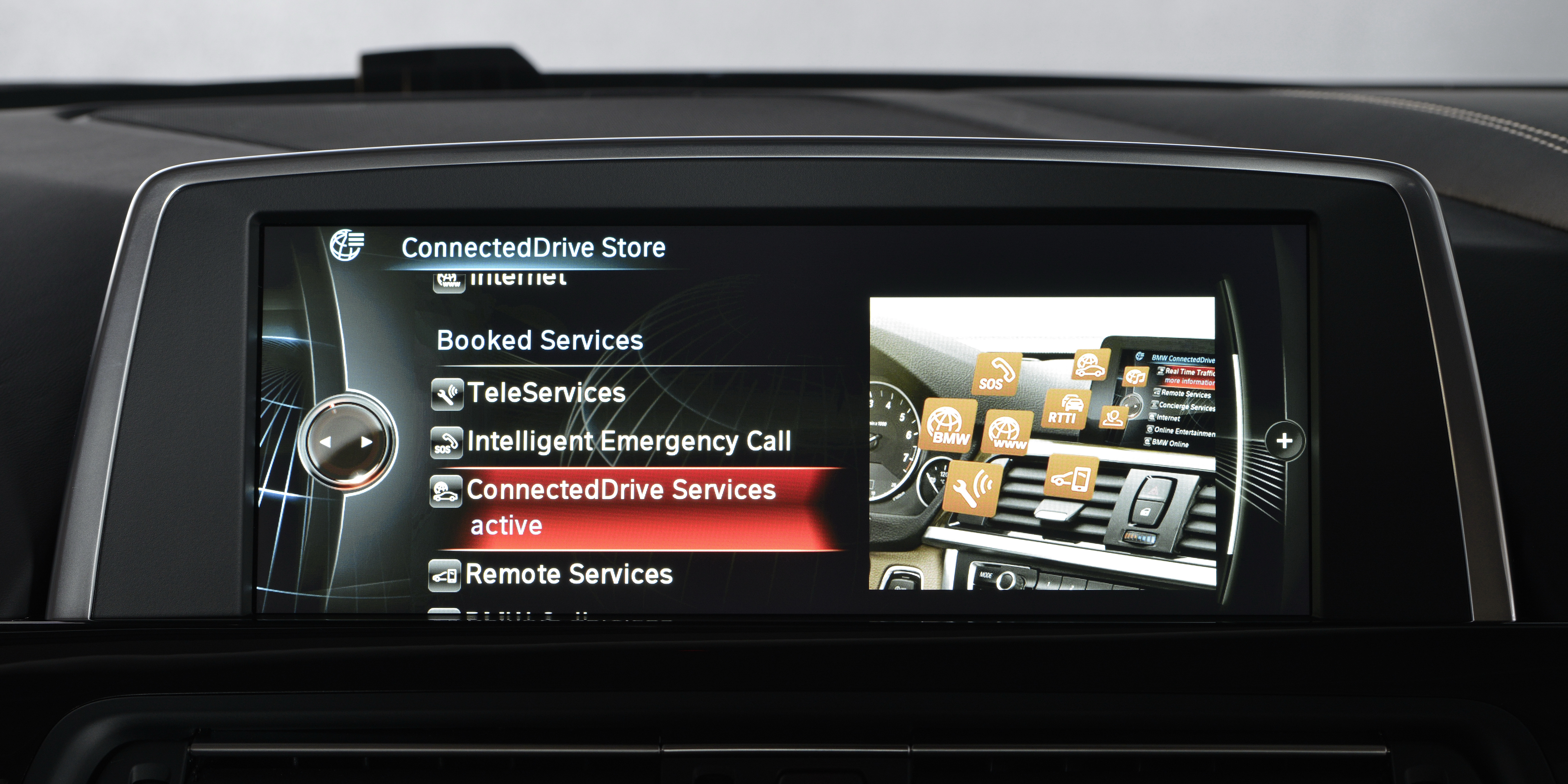
BMW ConnectedDrive user interface press picture courtesy of BMW Group

BMW ConnectedDrive user interface – where you can manually draw down that update

An issue that is constantly being raised regarding the Internet Of Everything is data and network security, including making sure the devices work to end-users’ expectations for proper, safe and secure operation. One of the constant mantras associated with this goal is to have a continual software-update cycle for these devices with the ability for customers to place new software in these devices in the field like you can with a regular computer or a smartphone.

BMW had brought about the ConnectedDrive online vehicle management and infotainment system to their newer BMW, MINI and Rolls Royce cars. But they discovered a flaw in the software and wrote a patch to rectify this problem. You would normally think that to have this patch delivered in to the vehicle management system, you would need to bring the car in to the dealership and this would be done as part of its regular preventative-maintenance servicing.

Here, it would typically involve you having to book the car in with the dealership including determining whether you need to use the courtesy car or not, drive it there at the appointed day and time and pick up the courtesy car if you needed it, then make a point of heading back to the dealership before they close to collect your car when it is ready.

But BMW had worked on delivering the software patch to the car via the mobile broadband link that the ConnectedDrive system depends upon for its functionality. Here, you would be advised that the update is taking place and at an appropriate time, the software patch would be applied. If you had garaged the car, you can manually “draw down” the update to your car once you drive it out of your garage.

What I see of this is the proactive way that the BMW Group have been able to use what is taken for granted with most computer operating systems to roll out critical software patches to their vehicles, which is something to be considered of importance when it comes to data security. This has to work not just through the life-cycle of a vehicle but beyond especially in markets where vehicles are likely to benefit from long service lives.

Consumer Electronics Show 2015–Part 2

Previously, in Part 1, I covered the trends that are affecting personal computing which encompases laptops / notebooks, tablets including the “2-in-1” convertible or detachable units, and the smartphones.

As I continue coverage of the trends shown at this year’s Consumer Electronics Show, I am highlighting what is being highlighted when we think of the connected world and the Internet Of Things. This is where devices we have on ourselves or use in the home, or the cars we drive, connect to each other and the Internet to acquire a range of impressive capabilites.

Wearable technology

There is an increasing number of smartwatches and other wearables being launched at this year’s Consumer Electronics Show. These are based on the Android Wear platform along with Tizen and other proprietary wearable platforms. It is although Apple has their smartwatch close to launch as part of their iOS ecosystem. A question that often came to mind is whether the smartwatch is to be seen as a bridge device between your smartphone and other wearable devices.

Sony raised the bar for Android Wear by integrating a GPS in to the metal-look variant of their Smartwatch 3 Android Wear watch. It may be seen as a way to provide standalone navigation and distance measurement for this watch or to serve as a secondary GPS sensor for your smartphone.

LG had headed towards smartwatches by putting forward one that is to run WebOS. This is part of having their devices run the descendent of the Palm operating system which HP refashioned as WebOS.

Lenovo had jumped on the wearable bandwagon by offering the Vibe lineup of wearable products. At the moment, the first of these products is the Vibe Band which is a water-resistant fitness band that uses an e-ink display, allowing for this device to run longer on a single battery charge.

There have been a few weirdly wonderful wearable devices like some snowboard bindings that help you plough through the powder better. These bindings measure the forces you apply on your feet as you slide down the slope and an app uses your smartphone’s GPS and these sensors to assess your snowboarding prowess. There is the Misfit LED which works alongside the Misfit range of activity trackers to show how you are performing. But the most weird device is the Emiota Belty which is a men’s dress belt that records your waistline and reports it back to your smartphone.

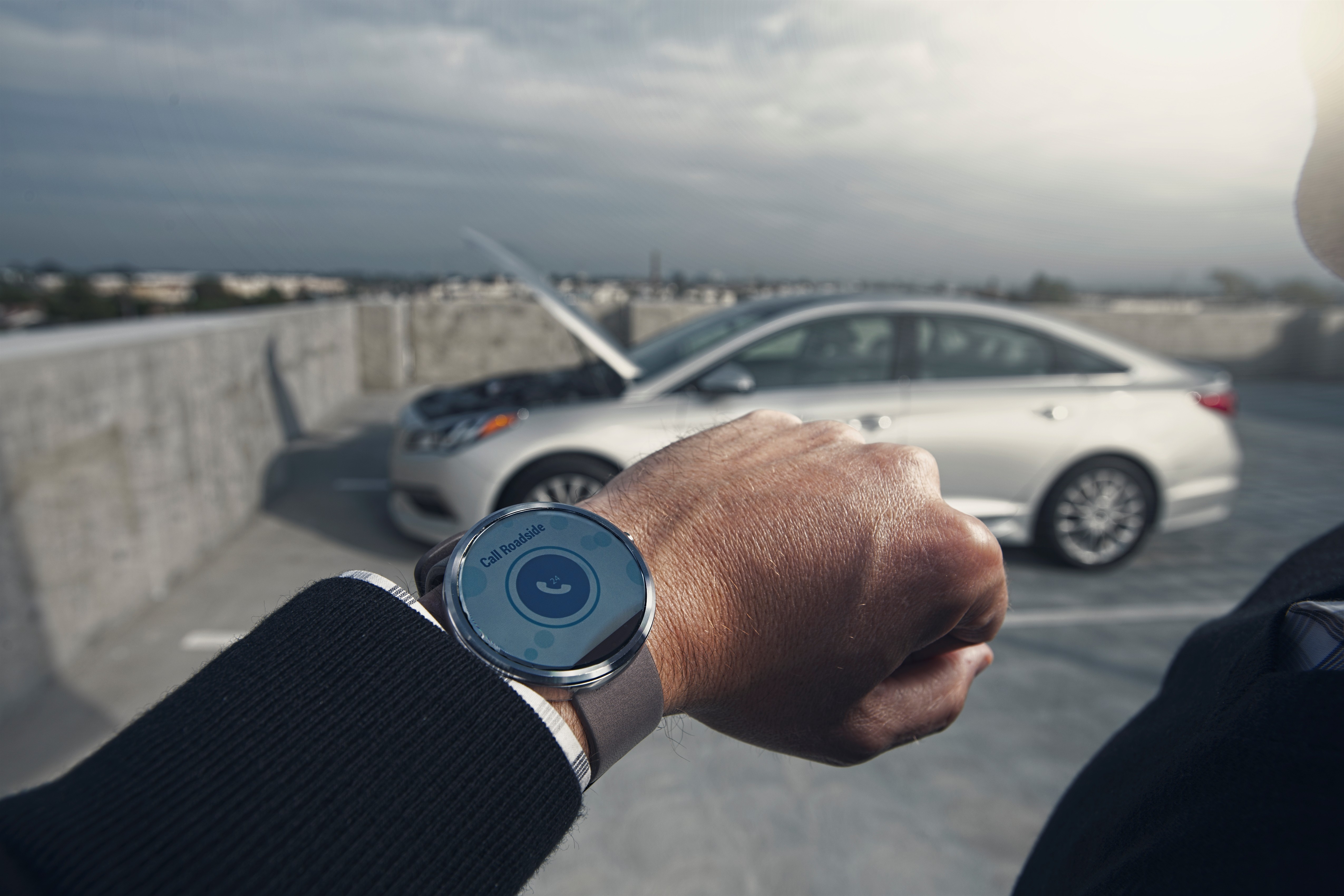
Hyundai Blue Link smartwatch app press photo courtesy of Hyundai America

Hyundai Blue Link smartwatch app – your smartwatch is your keyfob

The smartwatch is becoming part of the “connected car” ecosystem thanks to some vehicle builders. As I will mention below, BMW uses the smartwatch as a key fob that is to be part of their self-parking setup that they are working on. But Hyundai has presented the Blue Link app for the Apple Watch and Android Wear platforms so you can use this watch like the typical button-equipped car keyfob. Think of this as being to touch your watch to start your Veloster from afar, open its doors or have that coupe flash its headlights so you can locate it in the car park.

The connected car

Speaking of which, the car that links to the home network and the Internet is being given a fair bit of airtime by most of the vehicle manufacturers. This is promoted by Mercedes-Benz who were exhibiting a capsule-style self-driving concept car, Ford demonstrating their idea of a self-driving car, and other vehicle builders talking about the self-driving idea for cars.

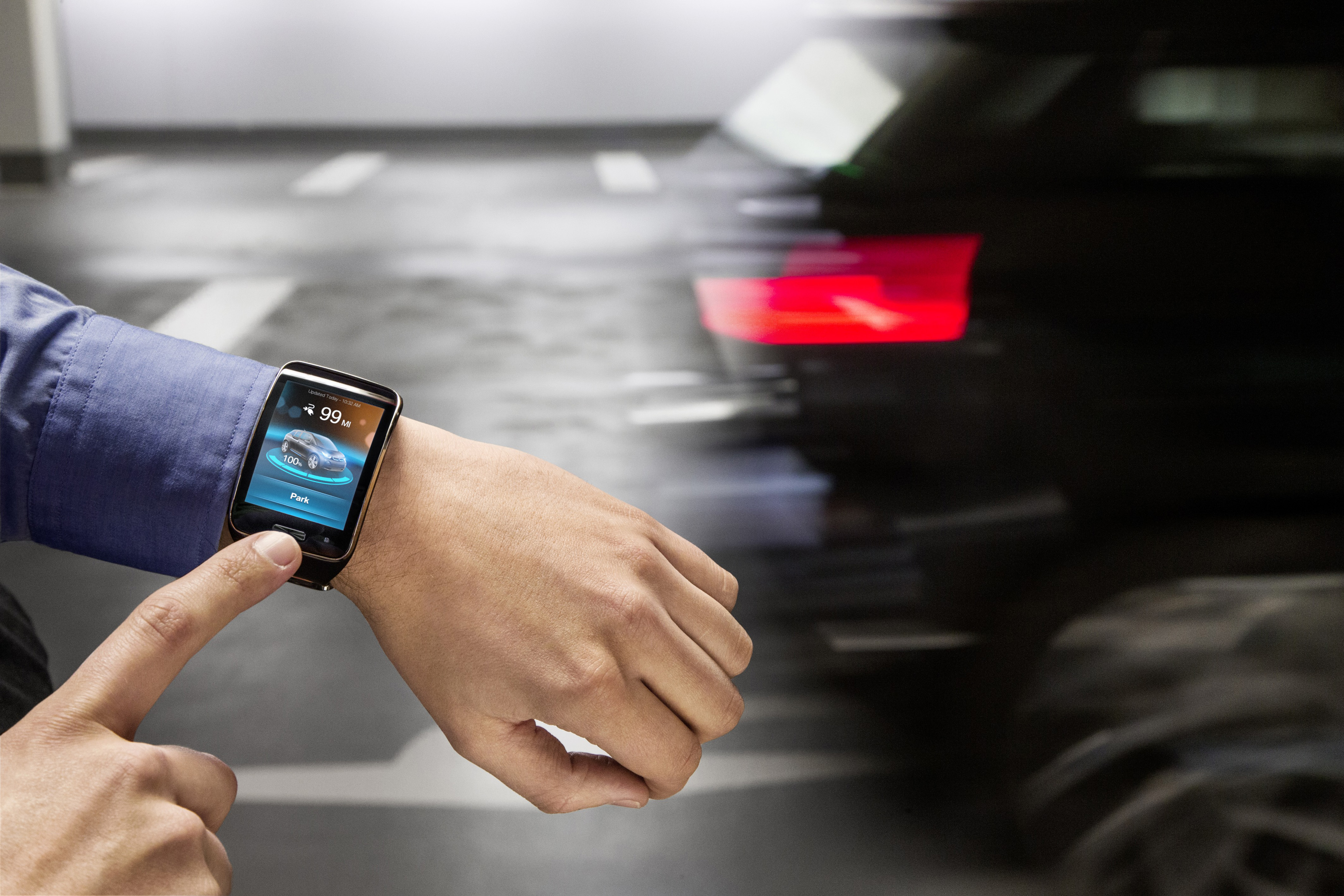
Smartwatch control surface for car press picture courtesy of BMW America

Smartwatch as control element of BMW car

BMW took the modest path by demonstrating a self-parking variant of the i3 car. This smartwatch-controlled car looks for a parking spot by itself and implements a map-based setup where it has pre-loaded maps of car parks. This is very like a valet-parking setup but without the car-park attendant parking your car for you in that car park.

BMW self-parking car press picture courtesy of BMW America

It parks itself

Ford launched the third iteration of their Sync connected-car technology which will implement a touchscreen as part of its control surface and use of Blackberry QNX technology. This is intended to be part of what will be offered for the 2016 model-year vehicles.

Even the chipset manufacturers have dipped their finger in the connected-car scene with NVIDIA announcing that they are purposing Tegra and similar processors to power the connected-car dashboards.
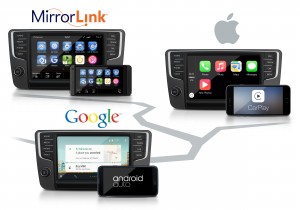
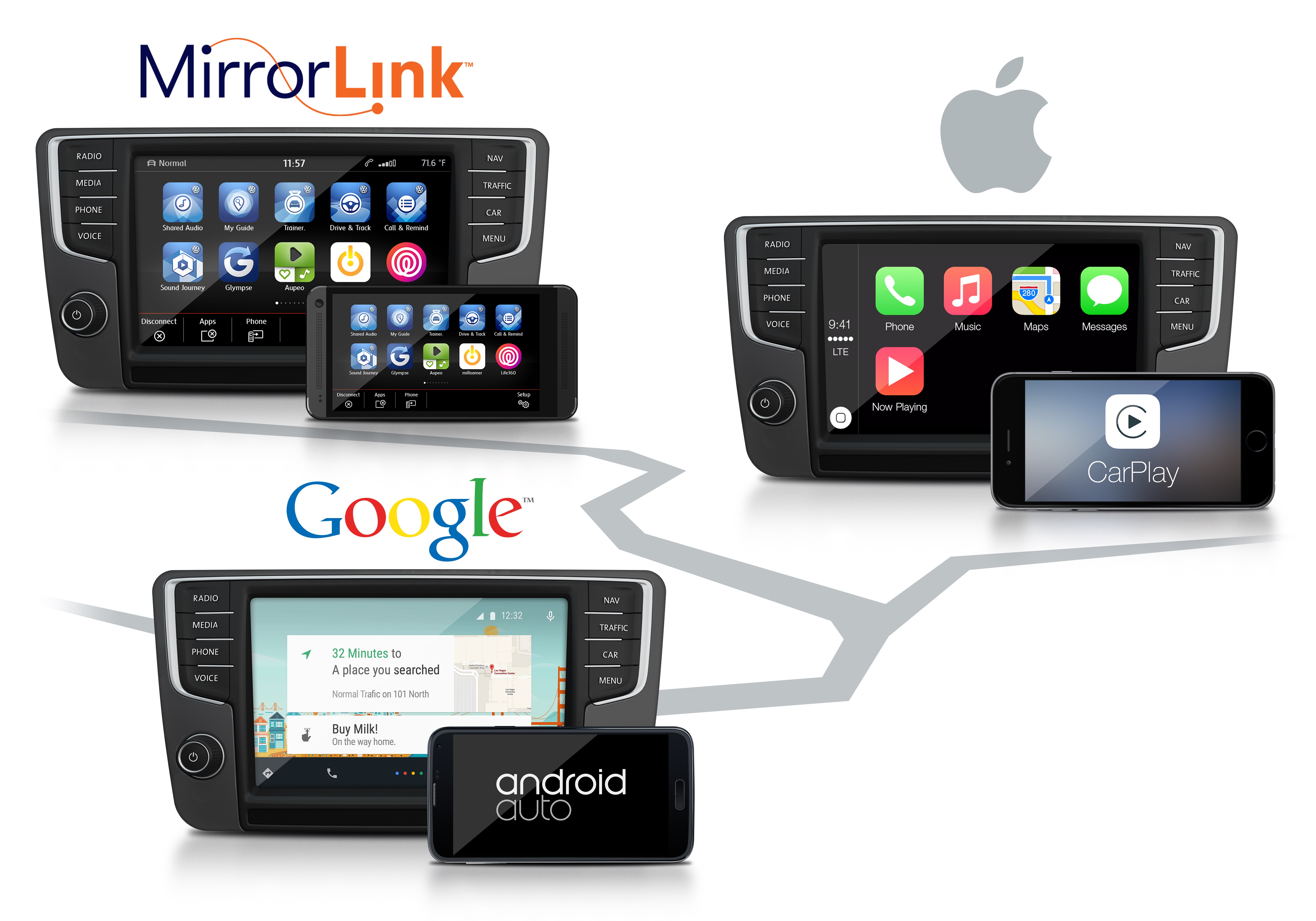
Next generation VW infotainment setup press picture courtesy of VW America

Next generation VW infotainment works with Apple Play, Android Auto or MirrorLink

As for infotainment, there is a trend to support both Android Auto and Apple CarPlay in both factory-supply and aftermarket infotainment setups. This means that the advanced abilities of these systems can work in a system-native manner to both iPhone and Android users. The Volkswagen Group had put this forward in the latest factory-spec infotainment setups and were even involved in the level-playing-field idea of MirrorLink even when it was put forward.

Parrot have premiered the RNB6 which is a 2-DIN media unit which runs both Android Auto and Apple CarPlay but has 55 watts per channel output for all of the channels along with more options. Pioneer have launched this function in to some of their newer 2-DIN car radios. These efforts satisfy realities that exist in countries like Australia where people are likely to keep their cars on the road for a very long time.

Internet Of Everything

The Internet Of Everything has become a key feature of this show with companies either showcasing new gadgets that link with the Internet or showcasing improvements for existing gadgets with this kind of ability. Most of these devices are still pitched as a “system” of devices, cloud services and apps supplied by the same vendor that are dependent on each other and there haven’t been any devices that are pitched in a manner where they can work with other manufacturers’ devices, services or apps.

There have been some devices that are targeted at your baby’s health such as a smart baby bottle holder measures food intake. Another of these is a Bluetooth-connected infant thermometer that uses your smartphone as its display with this being developed by the company that is behind Moto’s smart temporary tattoo.

Parrot has launched houseplant water monitors that link to the home network. One is the H2O which is a sensor and automated watering system that you can use in-situ with your plants and the other is the Parrot Pot to put your plant into.
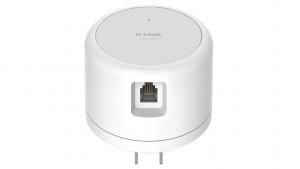
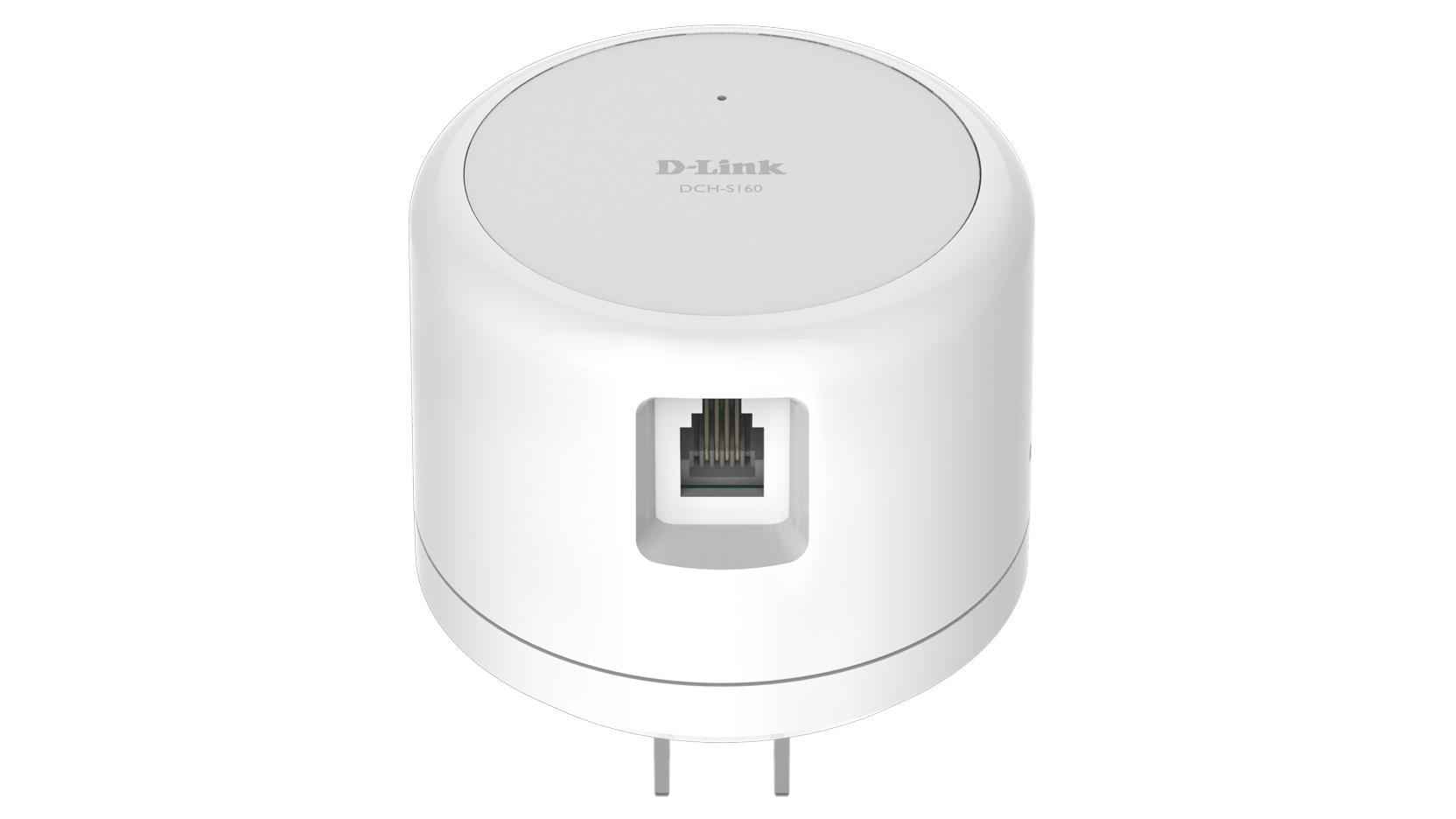
D-Link DCH-S160 myDLink water sensor press picture courtesy of D-Link America

D-Link myDLink water detector alerts you via your smartphone if your washing machine leaks or the bath overflows

BeeWi and D-Link are snapping at Belkin’s WeMo home-automation technology with their own technology. The latter have packaged it in as their myDLink package which is dependent on a home-automation hub even for the Wi-Fi devices. They have Z-Wave motion sensors and door magnet/reed sensors which interlink with this hub and also work as ambient temperature sensors.

They also have a Wi-Fi-based water-leak sensor that uses a wire to sense leaking water from that dribbling washing machine along with a Wi-Fi siren unit and smart plugs. This system is managed on your mobile device through an app that D-Link supplies. TRENDNet are running a HomePlug-based home automation package that links with their TPL-406E HomePlug AV500 adaptor and the THA-102PL appliance controller with both devices using the AC wiring to communicate to each other. They also have the THA-103AC which is a Wi-Fi-managed appliance controller that works as an AC750 Wi-Fi range extender and both these systems are controlled using an app for the iOS and Android platforms.
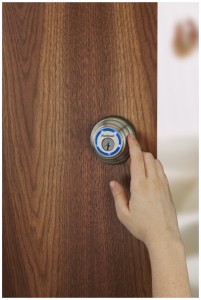
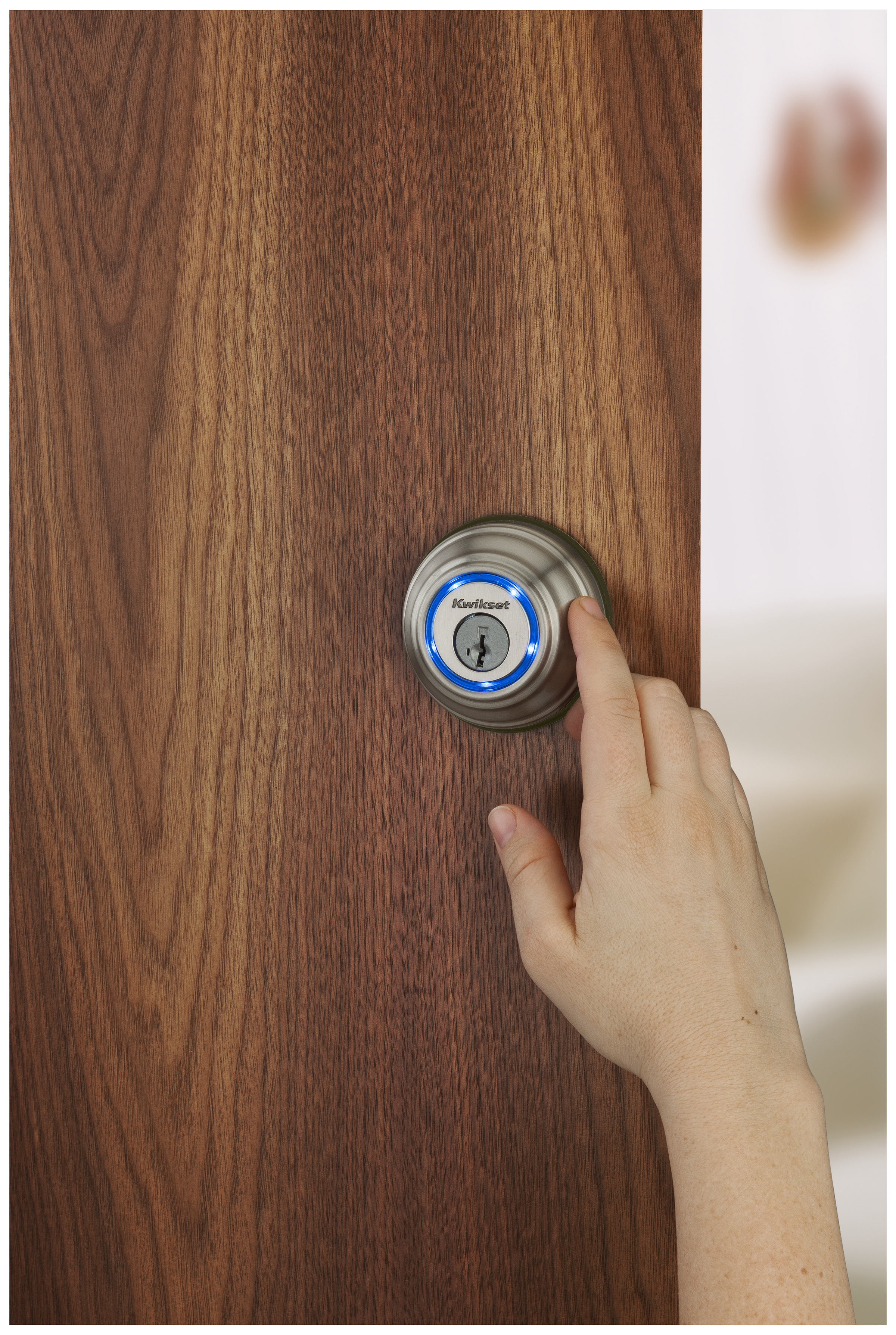
Kwikset Kevo cylindrical deadbolt in use - Kwikset press image

Kwikset Kevo Plus extends online monitoring and control to this Kwikset Kevo smart deadbolt

Two companies that are known for the common door lock have fielded some “smart-lock” products, but they are focused around the “bore-through” cylindrical deadbolt form-factor that is common on many American front doors. Firstly, Kwikset have provided an IP bridge and online service for their Kevo smart deadbolt. Here, the Bluetooth-IP bridge and online service allows for such functions as “remote unlock” for situations like when you have a friend or relative who doesn’t have a smartphone with the Kwikset Kevo app to come to your house to do some caretaking or fetch something for you or to have a repair technician visit your house to perform some repair works on an appliance while you are at work. The service is offered as an annually-billed service. August who offer a similar Bluetooth-driven smart lock have come up this path using their own IP bridge to provide “remote check / remote release” functionality.
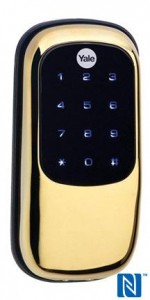
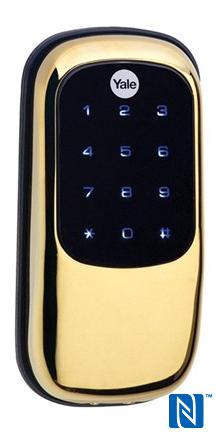
Yale Real Living NFC-capable smart deadbolt - outside view (brass finish) press picture courtesy of Yale America

Yale Real Living smart deadbolt – enter using the code on the keypad or touch your open-frame smartphone to it

As well, Yale have launched an NFC-based smart lock that works to the Seos NFC-based smart locking platform that ASSA Abloy, the “Electrolux” of the door-hardware industry, have established. This is one that comes in the same form factor as the Kwikset Kevo but doesn’t use a key outside as a failover method. As well, it requires you to touch your NFC-capable Android smartphone to the outside keypad to unlock your door.

Tagg are working with Alarm.com to implement a tracker system for your pets. This will be based around a collar attachment that implements GPS to locate and uses 3G as a “report-back” mechanism.

The CES tech fair has given Roost some boost with their “smart battery” for existing smoke alarms. Here, they were able to show and demonstrate this battery in action as a monitoring device for the common smoke alarm.

Appliances

Unlike the Internationaler Funkaustellung where a home-appliance trade show had been merged with this consumer-electronics trade show, there has become an increasing de-facto presence of home appliances at the Consumer Electronics Show. This has been brought on by some of the Korean and Japanese consumer-electronics manufacturers wanting to show their appliances at this trade show along with appliances, both major-class “white-goods” and countertop “small-goods” and is demonstrating that home appliances are increasingly becoming part of the “Internet Of Things”.

Dacor used this show to premiere their Android-controlled ovens which used an “app-cessory” approach to controlling these ovens. This also goes alongside the use of a touchscreen as a local control surface and is representative of what is to come about for premium “white goods”.
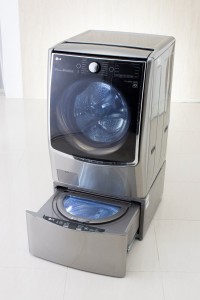
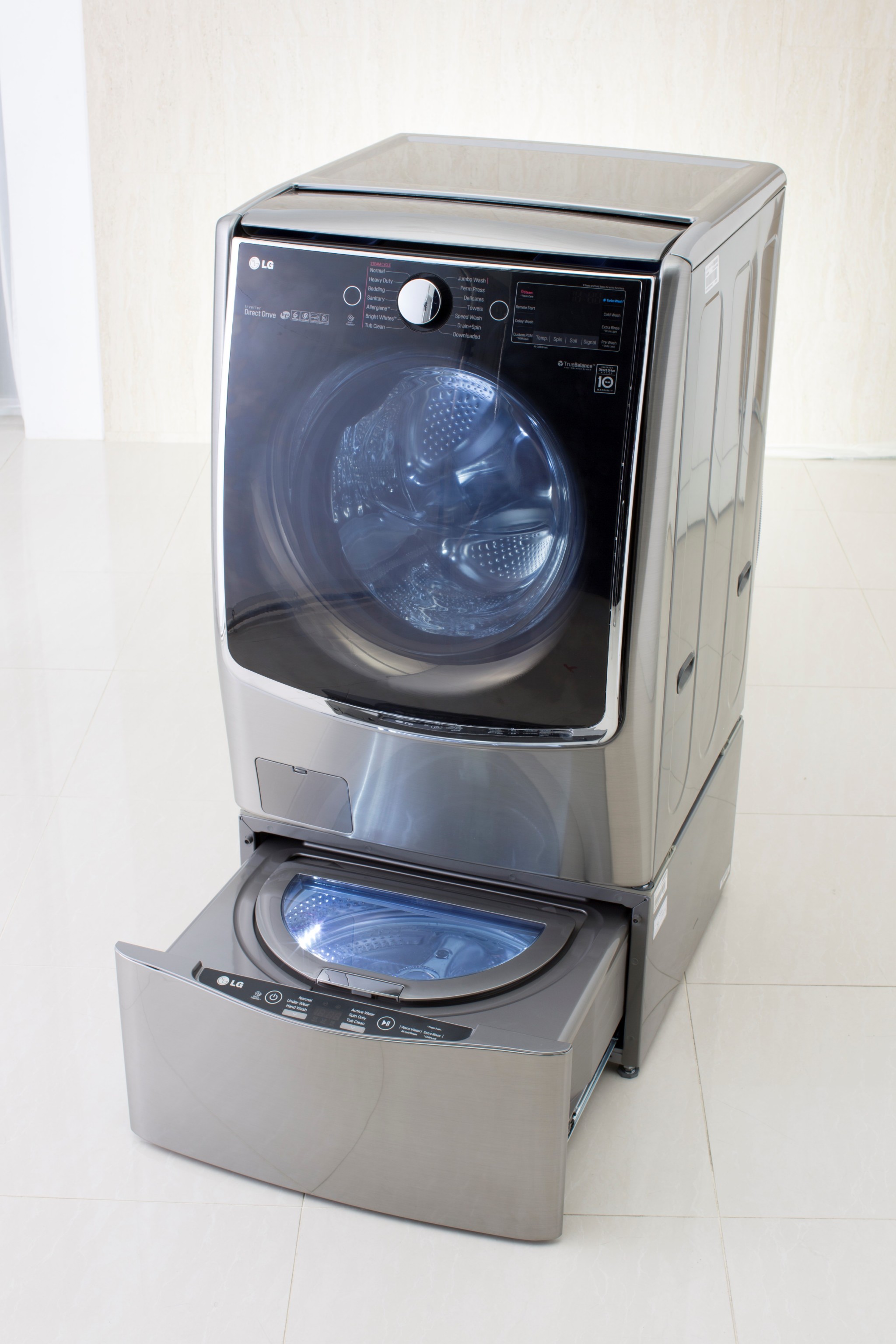
LG Twin Wash System press photo courtesy of LG America

LG Twin Wash System – two washing machines in one

LG have fielded some interesting “white goods” at this show. The show-stopper for them in this department was the Twin Wash “drawer-load” second washing machine which is installed underneath their recent front-load washing machines. It works in a manner where you can wash a small load while the main machine is processing another load. The example often cited was for ladies to wash a change of delicate underwear on the delicate-wash cycle while the main machine runs a lot of normal-cycle washing. Another example from my experience would be to turn around two white shirts by themselves while a large quantity of coloured clothes is being washed, with everything being ready to dry at the same time. They also fielded a “double door-in-door” fridge for easier organisation of food in the fridge. Samsung were fielding some interesting appliances like a dual-cavity oven and their “ActiveWash’ washing machine which implements an advanced wash action.

The coffee making scene closes in to the home network more with Smarter running a “bean-to-cup” espresso machine for the US market which uses Wi-Fi technology to facilitate its app-cessory control surface.

In the next part of this series, I will be looking at what the Consumer Electronics Show 2015 is representing for entertainment in the connected home.


Bluetooth 4.2 to provide direct Internet links for the Internet of Everything

Article

Bluetooth 4.2 introduces internet connectivity, ideal for the Internet of Things | Android Authority

New Bluetooth devices will connect directly to the internet | Engadget

From the horse’s mouth

Bluetooth

Standard product page

My Comments

Bluetooth has just “cemented” the latest version of their wireless-personal-network standard at 4.2 .

This will be a major improvement for the “Internet Of Things” or “Internet Of Everything” because each device can have an IPv6 and 6LoWPAN stack to provide a direct link to an IPv6 network. It avoids the need to create a protocol-level bridge between a pure Bluetooth network standard and an IP standard, rather allowing access to the IP network and an Internet “edge” router in the same vein as a Wi-Fi wireless device.

As well, there will be some privacy-based improvements like a requirement for users to interact with their mobile device such as deploying an app in order for the device to work with Bluetooth beacons. There is also the ability to support dynamically-assigned MAC addresses to facilitate this goal. Another improvement is to provide faster data throughput which could speed up things like data synchronisation or provide a “fatter pipe” for more data.

As I have said before, this standard is “baked in stone”, and needs hardware, operating-system and software support for it to take off. Some functions can be integrated in to earlier Bluetooth iterations in order to provide some of the new features to existing devices.

A 9V battery that makes your smoke alarm a smart smoke alarm

Article

Internet-connected battery turns your old smoke detector into a smart one | Mashable

Roost’s smart battery will school your old smoke alarm | Engadget

From the horse’s mouth

Roost Smart Battery

Product Page

Press Release

Kickstarter Page

My Comments

Although Google’s Nest has released a smoke alarm that can tie in with your home network, a Kickstarter project is in place to develop a replacement lithium battery that gives your existing smoke detector or carbon-monoxide detector “connected” abilities. This is addressing a situation where a lot of these alarm devices have ended up with dead or missing batteries most likely due to user forgetfulness.

The Roost Smart Alarm Battery works as a replacement battery for your smoke or carbon-monoxide alarm and links to your smartphone via your home Wi-Fi network and a cloud service to achieve its “smart abilities”. This is facilitated through the use of a low-power Wi-Fi chip that doesn’t place much demand on the battery and capitalises on the fact that these alarm devices don’t call on battery current except during an alarm event.

The smartphone app lets you know of the battery charge status and alerts you if the battery is critically low before the smoke alarm’s “low-battery” audible alert kicks in. As well, it becomes an extra “alarm surface” for your smoke alarm so that if you are away from your premises and the smoke alarm sounds, you are notified on your smartphone. The only limitation with this battery is that it won’t give you access to the “test” or “alarm-mute” functions that these devices have.

The optimistic life-span for the battery is around 5 years in this application compared to a typical 9V alkaline battery which lasts for one year at best. As well, the goal price for these devices is US$35 compared to a new Nest smoke/carbon-monoxide alarm which would set you back US$99. Even if you do go for the Nest smoke alarm, you may want to “bump” your existing smoke alarm to a secondary application like a holiday home but want the smart abilities.

At least it is another attempt at retrofitting existing devices to become part of the “Internet Of Things” by working on their power-supply needs.

Belkin and Mr Coffee introduces the first Wi-Fi-capable drip-filter coffee maker

Articles

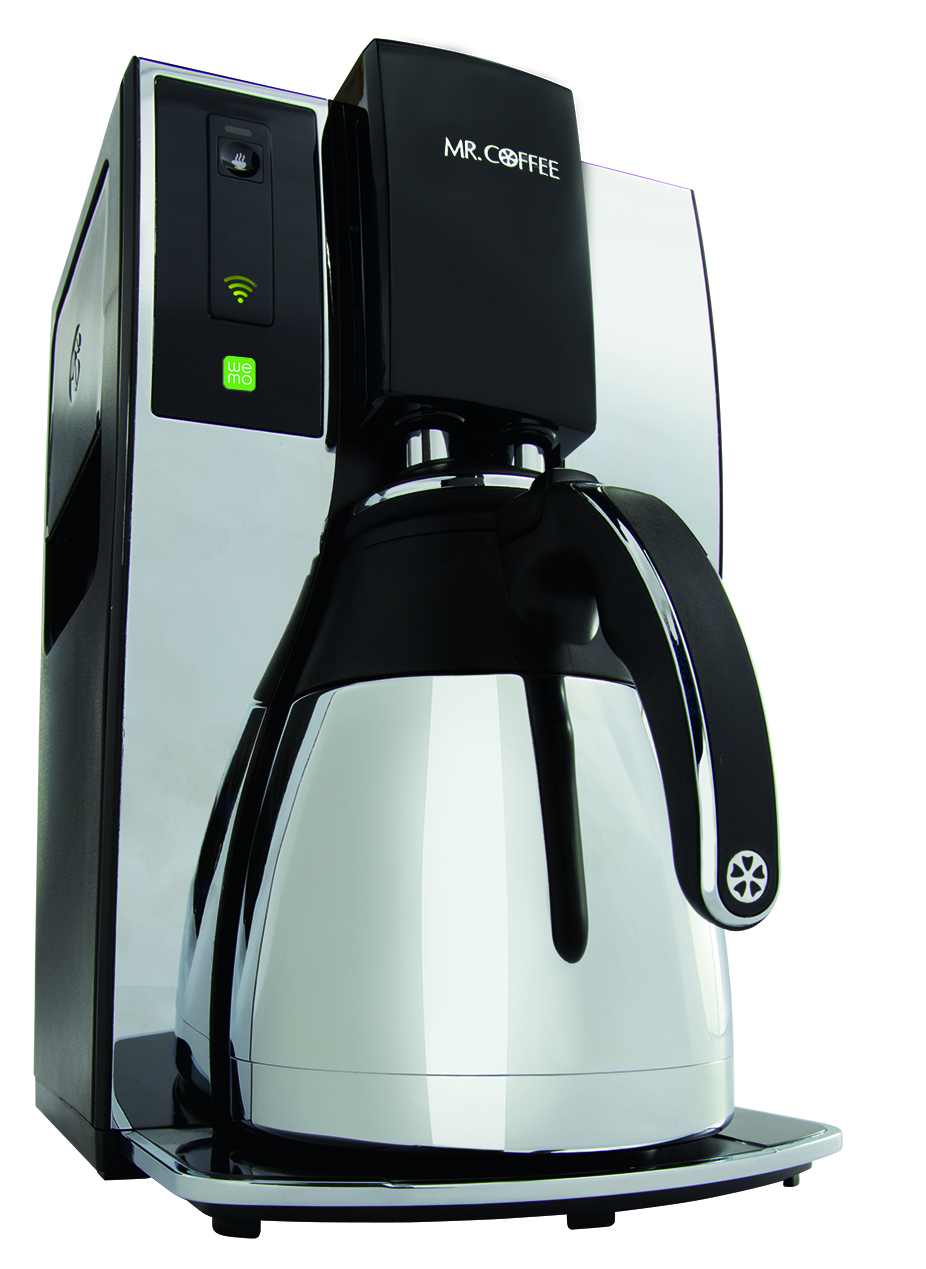
Mr. Coffee Smart 10-Cup Drip Filter Coffee Maker - press image courtesy of Belkin

The first connected drip-filter coffee maker

Belkin and Mr. Coffee want to brew your first pot via WiFi | Engadget

From the horse’s mouth

Belkin

Press Release

Mr. Coffee

10 Cup Smart Optimal Brew Coffeemaker

Product Page

https://www.youtube.com/watch?feature=player_embedded&v=uGODQUtxQD4

My Comments

After the success of the WeMo-capable Crock-Pot slow cooker, Belkin and Jarden have worked together on another smart appliance. This time it is a drip-filter coffee maker, courtesy of the Mr. Coffee brand.

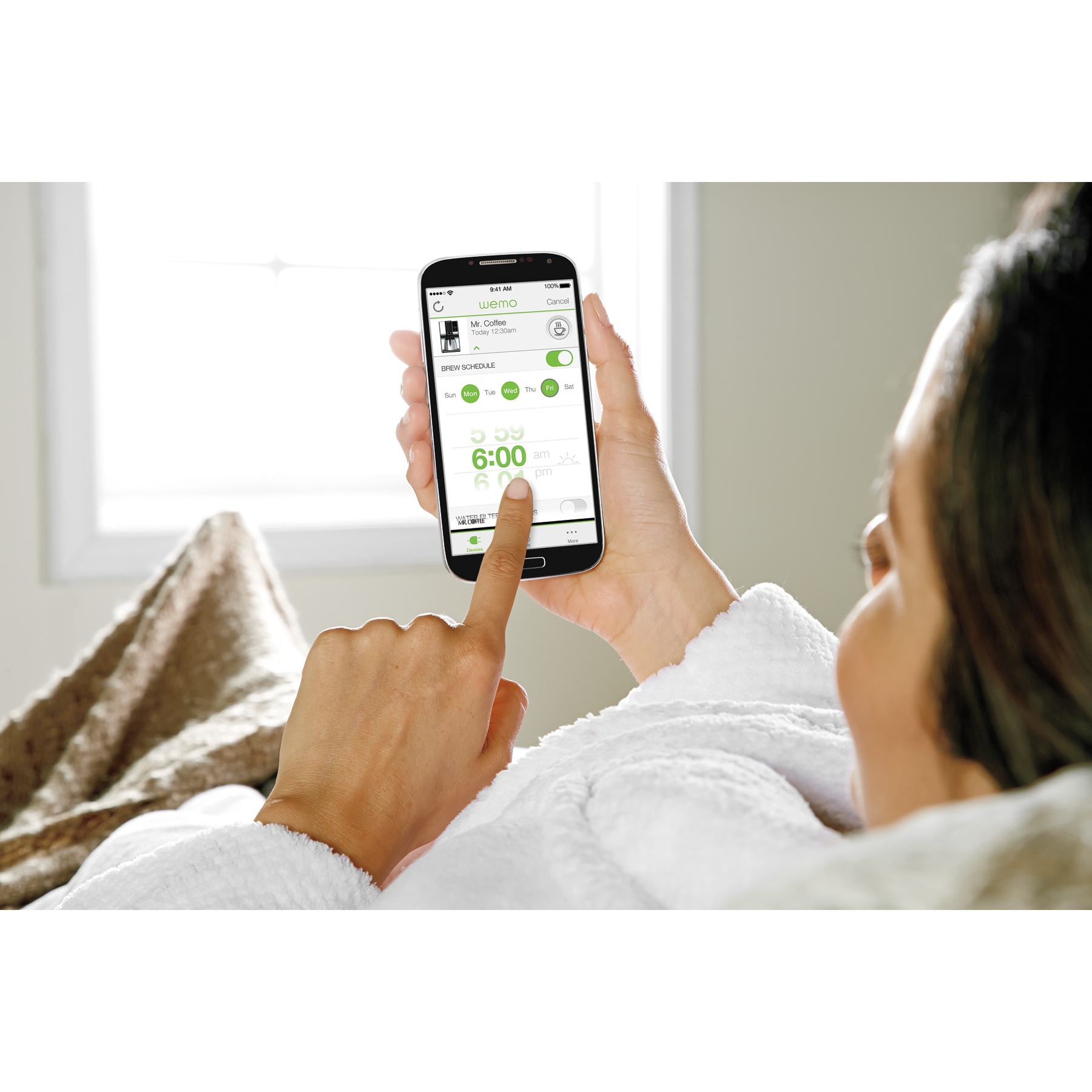
Mr. Coffee WeMo coffee maker app in use - press image courtesy of Belkin

Check or set up this coffee dripolator using your smartpnone

The coffee “dripolator” works on the same “app-cessory” setup as the WeMo-capable slow cooker where you connect this appliance to your home network via Wi-Fi wireless and you download an app to your iOS or Android smartphone or tablet. Here, the app becomes another control surface for the appliance, typically offering the ability to set up more functions like delayed brewing in this case.

With the app, you can schedule when you want the coffee maker to start brewing the coffee, know if it is still brewing the coffee as well as having the ability to place an “on-device” reminder about setting up the machine for the next pot to be brewed later.The second function comes in handy when you are entertaining because you could just glance at your smartphone to know if the coffee’s ready to serve.

This appliance can turn out 10 cups of coffee in its steel insulated carafe, which avoids the risk of having “stewed coffee” that can taste awful and was often associated with this class of coffee maker which typically heats the carafe to keep the coffee drinkably warm. Something I would like to see is a way for the software to gauge the brewing time for the coffee so you can know how much time there is left for you to, for example, get the cups, milk and sugar ready when serving that pot.

The use of Belkin’s WeMo infrastructure underscores a desire by Jarden, who own the Mr. Coffee and the Crock-Pot brands, not to “reinvent the wheel” when it comes to creating a network-connected appliance. Personally, I would like to see Belkin apply WeMo technology to the HomePlug powerline network path rather than using Wi-Fi wireless for “smart-appliance” applications. This is to make use of the appliance cord as the data path rather than making sure the appliance is within range of your wireless router for reliable network operation.

As well, I would see the app-driven “smart-appliance” concept work very well with appliances that are based around a “process-driven” operation. Here, their operation requires you to prepare them to complete a process that will finish some time later like making a pot of coffee, and you can have them tell you that it’s ready through your smartphone or use that smartphone to have them commence the job “as late as possible”.

The Nest thermostat receives a major firmware update

Article

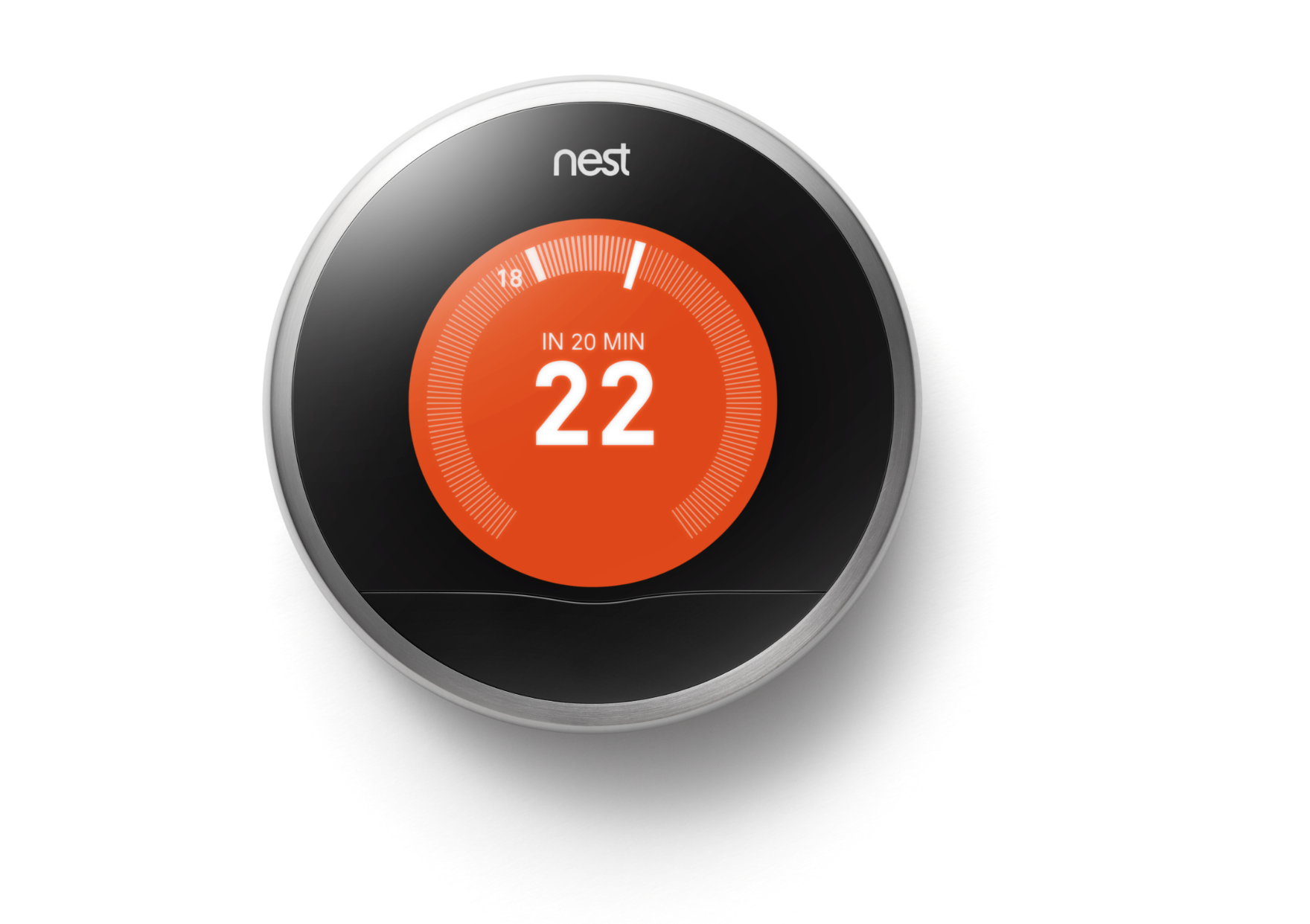
Nest Learning Thermostat courtesy of Nest Labs

The Nest thermostat now on new firmware

Google’s Nest thermostat becomes a faster learner with major software update | PC World

From the horse’s mouth

Nest.com

Software update product page

My Comments

As the Internet Of Things starts to evolve slowly, there has been news about a home-automation device being “refreshed” with new firmware with the ability for equipment in current use to benefit from the software update.

Here, the Nest thermostat will benefit from a large software update which improves its learning abilities and preemptive operation functionality. Rather than having the user spend a lot of time adjusting the system to suit their lifestyle, this thermostat can learn your requirements more quickly. As well, Google published an API so it can interact with other devices and become part of the “Internet Of Things”.

Google tweaked the operation algorithm using a continual “opt-in” feedback loop involving existing users and this could be seen as a way to further fin-tune any machine-learning or “preemptive operation” algorithms. There is also other functions like time and outdoor temperature / humidity display abilities as well as a “system check” function to help you troubleshoot your central heating or air-conditioning, especially before a season change.

The Nest thermostat will receive the updates by itself as long as it is connected to your home network and the Internet. This allows for a hands-off update process and is an example of what should be done to allow for reliable and secure operation of equipment that is part of the “Internet Of Everything”.