
Tag: regional infrastructure providers

Deutsche Glasfaser brings full fibre Internet to German rural areas

Article

Flag of Germany

Deutsche Glasfaser brings its own fibre-optic infrastructure to Germany’s regional and rural areas

Deutsche Glasfaser: Das Netz der Zukunft zieht schon bald in eurer Nachbarschaft ein | NETZWELT (German language / Deutsche Sprache)

From the horse’s mouth

Deutsche Glasfaser

Web site (German language / Deutsche Sprache)

My Comments

Deutsche Glasfaser, a German ISP based in Borken (near Dusseldorf), North Rhine Westphalia, is demonstrating an effort towards bringing high-speed Internet to Germany’s regional, rural and suburban areas.

Deutsche Telekom and Vodafone own most of Germany’s infrastructure-level Internet service. This is primarily copper-based technology, either VDSL using traditional telephone cabling or DOCSIS cable-modem technology using coaxial cabling. They offer their own retail services as well as leasing access to this infrastructure to third-party retail operators like 1&1 and Versatel.

A few operators are establishing fibre-to-the-building or fibre-to-the-premises networks and selling retail high-speed Internet service using these networks. This happens in some major cities. But rural and regional areas were just limited to the Deutsche Telekom or Vodafone offerings which weren’t likely to fare well when it comes to bandwidth or service stability. This is very similar to what happens in most countries when it comes to how areas outside major urban areas are treated when it comes to Internet service.

What Deutsche Glasfaser is doing is creating their own FTTP / FTTB infrastructure in these rural, regional and suburban areas, thus cutting out the copper-based technology that can limit bandwidth due to vectoring or error-mitigation measures. There is also a goal to create a nationwide fibre-optic network across Germany in order to establish some form of independence as far as infrastructure is concerned.

The activity that Deutsche Glasfaser and other city-based operators are doing within Germany is similar to what is going on in the UK. That is where many ISPs are setting up their own infrastructure and offering retail Internet service on that infrastructure that is better value for money than what BT Openreach has been offering.

There will be questions arising about whether these services will be required to wholesale their infrastructure-level broadband capacity to competing retail ISPs and at what point. This may be so where the EU or other groups push Germany to facilitate a lively competitive market for high-bandwidth Internet service.

At the moment, Deutsche Glasfaser is active in 1.3 million households in 13 of Germany’s states and slowly building out in more areas.

Service Packages at time of writing

There is complementary connection and installation for your Deutsche Glasfaser service when you take up one of their packages. This includes “shifting” your Internet and telephone service from your extant provider as well as porting your fixed-line number to their service.

€24.99 monthly introductory offer for the first 12 months of service

Price per month Bandwidth Fixed-line telephony
€44.99 300Mb/s download / 150Mb/s upload 2.9c / minute
€49.99 400Mb/s download / 200Mb/s upload Unlimited calls to fixed lines in Germany
€79.99 600Mb/s download / 300Mb/s upload Unlimited calls to fixed lines and mobile telephones in Germany
€89.99 1000Mb/s download / 500Mb/s upload Unlimited calls to fixed lines and mobile telephones in Germany

As far as I know, there doesn’t seem to be any tariff packages or extensions that allow low-cost or unlimited international calling to popular destinations.

They also offer an IPTV service known as DGTV as an extra-cost option. This has 70 high-definition channels, a PVR set-top box and access to video-on-demand services, It costs €15 per month on top of your Deutsche Glasfaser Internet and telephony package.

What I like of the Deutsche Glasfaser effort is that they are bringing up-to-date Internet technology towards rural, regional and suburban Germany through the use of fibre-to-the-premises or fibre-to-the-building technology. It could stir up others to work on similar projects through that country and through Europe.
How regional next-generation infrastructure providers enable competitive Internet service

Previous Coverage

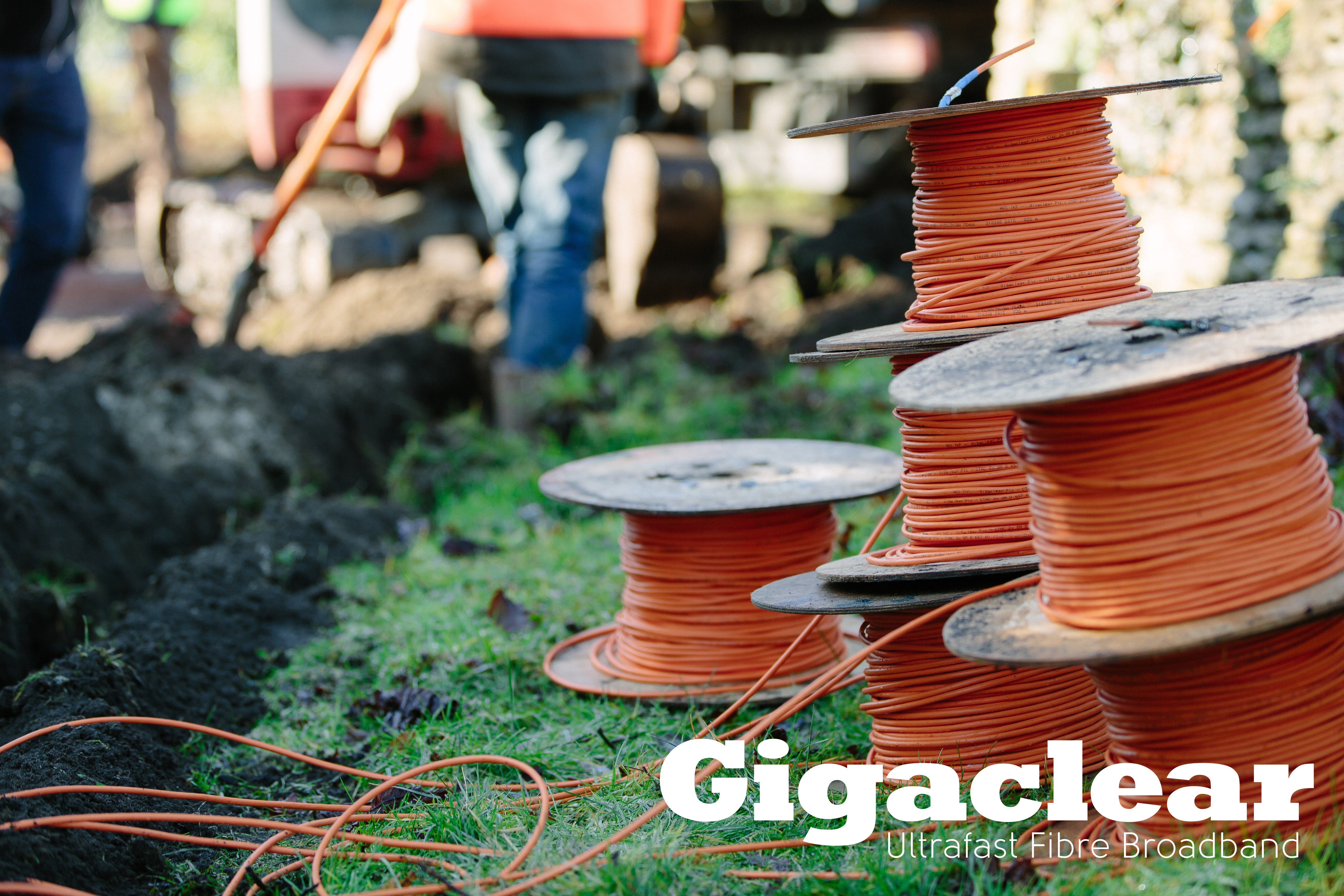
Gigaclear fibre-optic cable - picture courtesy of Gigaclear

Gigaclear – laying their own fibre-to-the-premises within a rural area in the UK

What is happening with rural broadband in the UK

Further Comments

In some countries like the UK, Australia and Germany, regional broadband infrastructure providers set up shop to provide next-generation broadband to a particular geographic area within a country.

This is used to bring next-generation broadband technology like fibre-to-the-premises to homes and businesses within that geographic area. But let me remind you that fibre-to-the-premises isn’t the only medium they use — some of them use fixed wireless or a fibre-copper setup like HFC cable-modem technology or fibre + Ethernet-cable technology. But they aren’t using the established telephone network at all thus they stay independent of the incumbent infrastructure provider and, in some areas like rural areas, that provider’s decrepit “good enough to talk, not good enough for data” telephone wiring.

In the UK especially, most of these operators will target a particular kind of population centre like a rural village cluster (Gigaclear, B4RN, etc), a large town or suburb (Zzoom), city centres (Cityfibre, Hyperoptic, etc) or even just greenfield developments. Some operators set themselves up in multiple population centres in order to get them wired up for the newer technology but all of the operators will work on covering the whole of that population centre, including its outskirts.

This infrastructure may be laid ahead of the incumbent traditional telco or infrastructure operator like Openreach, NBN or Deutsche Telekom or it may be set up to provide a better Internet service than what is being offered by the incumbent operator. But it is established and maintained independently of the incumbent operator.

Internet service offerings

Typically the independent regional broadband infrastructure providers run a retail Internet-service component available to households and small businesses in that area and using that infrastructure. The packages are often pitched to offer more value for money than what is typically offered in that area thanks to the infrastructure that the provider controls.

But some nations place a competitive-market requirement on these operators to offer wholesale Internet service to competing retail ISPs, with this requirement coming in to force when they have significant market penetration.That is usually assessed by the number of actual subscribers who are connected to the provider’s Internet service or the number of premises that are passed by the operator’s street-level infrastructure. In addition, some independent regional infrastructure providers offer wholesale service earlier as a way to draw in more money to increase their footprint.

This kind of wholesale internet service tends to be facilitated by special wholesale Internet-service markets that these operators are part of. Initially this will attract boutique home and small-business Internet providers who focus on particular customer niches. But some larger Internet providers may prefer to take an infrastructure-agnostic approach, offering mainstream retail Internet service across multiple regional service providers.

Support by local and regional government

Local and regional governments are more likely to provide material and other support to these regional next-generation infrastructure operators. This is to raise their municipality’s or region’s profile as an up-to-date community to live or do business within. It is also part of the “bottom-up” approach that these operators take in putting themselves on the map.

In a lot of cases, the regional next-generation infrastructure providers respond to tenders put forward by local and regional governments. This is either to provide network and Internet service for the government’s needs or to “wire up” the government’s are of jurisdiction or a part thereof for next-generation broadband.

Legislative requirements

There will have to be legislative enablers put forward by national and regional governments to permit the creation and operation of regional next-generation broadband network infrastructure. This could include the creation and management of wholesale-broadband markets to permit retail-Internet competition.

There is also the need to determine how much protection a small regional infrastructure operator needs against the incumbent or other infrastructure operators building over their infrastructure with like offerings. This may be about assuring the small operator sufficient market penetration in their area before others come along and compete, along with providing an incentive to expand in to newer areas.

It will also include issues like land use and urban planning along with creation and maintenance of rights-of-way through private, regulated or otherwise encumbered land for such use including competitors’ access to these rights-of-way.

That also extends to access to physical infrastructure like pits, pipes and poles by multiple broadband service providers, especially where an incumbent operator has control over that infrastructure. It can also extend to use of conduits or dark fibre installed along rail or similar infrastructure expressly for the purpose of creating data-communications paths.

That issue can also extend to how multiple-premises buildings and developments like shopping centres, apartment blocks and the like are “wired up” for this infrastructure. Here, it can be about allowing or guaranteeing right of access to these developments by competing service providers and how in-building infrastructure is provided and managed.

The need for independent regional next-generation broadband infrastructure

But if an Internet-service market is operating in a healthy manner offering value-for-money Internet service like with New Zealand there may not be a perceived need to allow competing regional next-generation infrastructure to exist.

Such infrastructure can be used to accelerate the provision of broadband within rural areas, provide different services like simultanaeous-bandwidth broadband service for residential users or increase the value for money when it comes to Internet service. Here, the existence of this independent infrastructure with retail Internet services offered through it can also be a way to keep the incumbent service operator in check.