
Tag: political advertising

What can be done about taming political rhetoric on online services?

Article
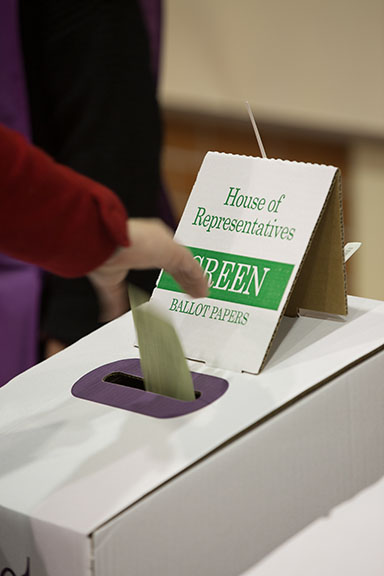
Australian House of Representatives ballot box - press picture courtesy of Australian Electoral Commission

Online services may have to observe similar rules to traditional media and postal services when it comes to handling election and referendum campaigns

There’s a simple way to reduce extreme political rhetoric on Facebook and Twitter | FastCompany

My Comments

In this day and age, a key issue that is being raised regarding the management of elections and referenda is the existence of extreme political rhetoric on social media and other online services.

But the main cause of this problem is the algorithmic nature associated with most online services. This can affect what appears in a user’s default news feed when they start a Facebook, Twitter or Instagram session; whether a bulk-distributed email ends up in the user’s email inbox or spam folder; whether the advertising associated with a campaign appears in search-driven or display online advertising; or if the link appears on the first page of a search-engine user experience.

This is compared to what happens with traditional media or postal services while there is an election or referendum. In most of the democracies around the world, there are regulations overseen by the electoral-oversight, broadcasting and postal authorities regarding equal access to airtime, media space and the postal system by candidates or political parties in an election or organisations defending each option available in a referendum. If the medium or platform isn’t regulated by the government such as what happens with out-of-home advertising or print media, the peak bodies associated with that space establish equal lowest-cost access to these platforms through various policies.

Examples of this include an equal number of TV or radio commercial spots made available at the cheapest advertising rate for candidates or political parties contesting a poll, including the same level of access to prime-time advertising spaces; scheduled broadcast debates or policy statements on free-to-air TV with equal access for candidates; or the postal service guaranteeing priority throughput of election matter for each contestant at the same low cost.

These regulations or policies are to make it hard for a candidate, political party or similar organisation to “game” the system but allow voters to make an informed choice about whom or what they vote for. But the algorithmic approach associated with the online services doesn’t guarantee the candidates equal access to the voters’ eyeballs thus requiring the creation of incendiary content that can go viral and be shared amongst many people.

What needs to happen is that online services have to establish a set of policies regarding advertising and editorial content tendered by candidates, political parties and allied organisations in order to guarantee equal delivery of the content.  This means marking such content so as to gain equal rotation in an online-advertising platform; using “override markers” that provide guaranteed recorded delivery of election matter to one’s email inbox or masking interaction details associated with election matter posted on a Facebook news feed.

But the most important requirement is that the online platforms cannot censor or interfere with the editorial content of the message that is being delivered to the voters by them. It is being seen as important especially in a hyper-partisan USA where it is perceived by conservative thinkers that Silicon Valley is imposing Northern-Californian / Bay-Area values upon people who use or publish through their online services.

A question that can easily crop up is the delivery of election matter beyond the jurisdiction that is affected by the poll. Internet-based platforms can make this very feasible and it may be considered of importance for, say, a country’s expats who want to cast their vote in their homeland’s elections. But people who don’t live within or have ties to the affected jurisdiction may see it as material of little value if there is a requirement to provide electoral material beyond a jurisdiction’s borders. This could be answered through social-media and email users, or online publishers having configurable options to receive and show material from multiple jurisdictions rather than the end-user’s current jurisdiction.

What is being realised here is that online services will need to take a leaf out of traditional regulated media and communication’s playbook to guarantee election candidates’ fair equal access to the voters through these platforms.
Facebook now offers a way to turn off political ads on its main platforms

Article Facebook login page

Don’t want political ads in your Facebook or Instagram feed? You’ll be able to turn that off | CNet

From the horse’s mouth

Facebook

Launching The Largest Voting Information Effort in US History (Press Release)

Videos

Control Political Ad Content on Facebook (Click or tap to play)

Control Political Ad Content on Instagram (Click or tap to play)

My Comments

Facebook is introducing a feature that allows its users to effectively “mute” political advertising including issues-driven advertising on their main social-Web platform as well as Instagram.

This feature will be available to USA-based accounts as part of Facebook’s voter-information features for the 2020 Presidential Elections. That includes information on how and where to register along with where and when to vote, including early-voting (pre-poll voting) and postal-voting information. It underscores Facebook’s role as part of Silicon Valley’s effort to “get out the vote” in the USA.

Personally I am not sure whether this setup will provide information relevant to American expats who have moved to other countries like how their local US embassy or consulate is facilitating their vote. It is because in most cases these expats will still have voting rights of some sort for US elections.

The option will be available in the “Ad Preferences” option for your platform’s user-account settings on both Facebook and Instagram. Or both platforms will have a contextual option, highlighted under a stylised “i”, available for political ads allowing you to see fewer ads of this type, This can be set up using your Web-based user experience or the official native mobile-platform apps that you use for working these platforms with.

Of course, there won’t be the ability to regulate editorial content from media organisations that is posted or shared through Facebook or Instagram. This will be an issue when you deal with media outlets that have a highly-partisan editorial policy. Nor will there be the ability to control posts, shares and comments from Pages and Profiles that aren’t shared as a paid advertisement.

There may also be questions about whether your favourite politician’s, political party’s or civic-society organiation’s Facebook or Instagram traffic will appear in your platform’s main view especially if they pay to increase viewership of these posts. It can be of concern for those of us who have a strong role in political and civic society and see the Facebook traffic as a “news-ticker” for the political entities we engage with.

Facebook has an intent to roll this feature out to other countries where they have established systems for managing and monitoring political advertising on their platforms. At least they are the first online ad platform that allows users to have control over the political and issue advertising that they see while they use that platform.

Google to keep deep records of political ads served on their platforms

Articles

Australian House of Representatives ballot box - press picture courtesy of Australian Electoral Commission

Are you sure you are casting your vote without undue influence?

Google Releases Political Ad Database and Trump Is the Big Winner | Gizmodo

From the horse’s mouth

Google

Introducing A New Transparency Report For Political Ads (Blog Post)

Transparency Report – Political Advertising On Google (Currently relevant to federal elections in the USA)

Advertising Policies Help Page – Political Advertising (Key details apply to USA Federal elections only)

My Comments

If you use YouTube as a free user or surf around the Internet to most ad-facilitated blogs and Websites like this one, you will find that the display ads hosted are provided by an ad network owned or managed by Google. Similarly, some free ad-funded mobile apps may be showing ads that are facilitated through Google’s ad networks. Similarly, some advertisers pay to have links to their online resources placed at the top of the Google search-results list.

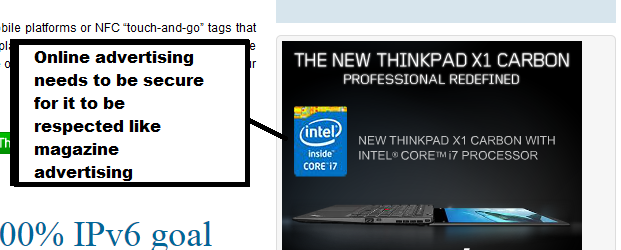
Online ad - to be respected like advertising in printed media

Google to keep records of political ads that appear on these sites so they have the same kind of respect as traditional print ads

Over the past few years, there has been a strong conversation regarding the authenticity of political advertising on the online space thanks to the recent election-meddling and fake news scandals. This concern has been shown due to the fact that the online space easily transcends jurisdictional borders and isn’t as regulated as traditional broadcast, print and away-from-home advertising especially when it comes to political advertising.

Then there is also the fact that relatively-open publishing platforms can be used to present content of propaganda value as editorial-grade content. The discovery of this content can be facilitated through search engines and the Social Web whereupon the content can even be shared further.

Recently Facebook have taken action to require authentication of people and other entities behind ads hosted on their platforms and Pages or Public Profiles with high follower counts. This ins in conjunction to providing end-users access to archival information about ad campaigns ran on that platform. This is part of increased efforts by them and Google to gain control of political ads appearing on their platforms.

But Google have taken things further by requiring authentication and proof of legitimate residency in the USA for entities publishing political ads through Google-managed ad platforms that targeting American voters on a federal level. As well, they are keeping archival information about the political ads including the ads’ creatives, who sponsored the ad and how much is spent with Google on the campaign. They are even making available software “hooks” to this data for researchers, concerned citizens, political watchdog groups and the like to draw this data in to their IT systems for further research.

If you view a political ad in the USA on this site or other sites that use display advertising facilitated by Google, you will find out who is behind that ad if you click or tap on the blue arrow at the top right hand corner of that ad. Then you will see the disclosure details under the “Why This Ad” heading. Those of you who use YouTube can bring up this same information if you click or tap on the “i” (information) or three-dot icon while the ad is playing.

Google are intending to roll these requirements out for state-level and local-level campaigns within the USA as well as rolling out similar requirements with other countries and their sub-national jurisdictions. They also want to extend this vendor-based oversight towards issues-based political advertising which, in a lot of cases, makes up the bulk of that kind of advertising.

Personally I would also like to see Google and others who manage online ad platforms be able to “keep in the loop” with election-oversight authorities like the USA’s Federal Election Commission or the Australian Electoral Commission. Here, it can be used to identify inordinate political-donation and campaign-spending activity that political parties and others are engaging in.

Google and Facebook are starting to bring accountability to political advertising

Articles

Australian House of Representatives ballot box - press picture courtesy of Australian Electoral Commission

Are you sure you are casting your vote without undue influence? (Courtesy of Australian Electoral Commission)

Facebook announces major changes to political ad policies | NBC News

Facebook reveals new political ad policies in wake of U.S. election | VentureBeat

What Can and Can’t You Do with Political Advertising on Facebook? | Spatially

Google Joins Facebook In Banning All Ads Related To Ireland’s Big Abortion Vote | Gizmodo

From the horse’s mouth

Facebook

Update on Our Advertising Transparency and Authenticity Efforts {Press Release)

Facebook will not be accepting referendum related ads from advertisers based outside of Ireland {Press Release)

Google

Supporting election integrity through greater advertising transparency (Blog Post)

My Comments

Over the last five months, a strong conversation has risen surrounding electioneering and political advertising on the online platforms including social media and online advertising.

The trends concerning this activity is that the political advertising spend is moving away from traditional print and broadcast media towards online media as we make more use of highly-portable computing devices to consume our information and entertainment.

Issues that have also been raised include the use of fake comments and pre-programmed auto-responding “bots” as part of political campaigns. This is alongside the rise of very divisive political campaigns during the 2016 Brexit and US Presidential election cycles that played on racial and religious prejudices. There is also the fact that nation states with improper intentions are seeing the idea of poisoning the information flow as another weapon in their cyber-warfare arsenal.

It has also been facilitated through the use of highly-focused data-driven campaign-targeting techniques based on factors like race, gender, location and interests, with this practice being highlighted in the Cambridge Analytica saga that caught up Facebook and Twitter.

As well, the online advertising and social media platforms have made it easy to create and maintain an advertising or editorial campaign that transcends jurisdictional borders. This is compared to traditional media that would be dependent on having the advertising material pass muster with the media outlet’s advertising staff in the outlet’s market before it hits the presses or the airwaves.

This issue will become more real with the use of addressable TV advertising which is currently practised with some advertising-based video-on-demand services and some cable-TV platforms but will become the norm with traditional linear TV being delivered through through the increasing use of interactive-TV platforms.

This technology would facilitate “hyper-targeting” of political campaigns such as municipal-level or postcode/ZIP-code targeting yet maintain the same “air of legitimacy” that the traditional TV experience provides, making it feasible to destabilise elections and civil discourse on the local-government level.

Election-oversight authorities in the various jurisdictions like the Australian Electoral Commission or the UK’s Electoral Commission have been doing battle with the online trend because most of the legislation and regulation surrounding political and election activities has been “set in stone” before the rise of the Internet. For example, in most jurisdictions, you will see or hear a disclosure tag after a political advertisement stating which organisation or individual was behind that ad. Or there will be financial reporting and auditing requirements for the election campaigns that take place before the polls.

Facebook and Google are having to face these realities through the use of updated advertising-platform policies which govern political advertising, But Facebook applies this to candidate-based campaigns and issues-based campaigns while Google applies this to candidate-based campaigns only at the time of writing.

Firstly there is a prohibition on political advertising from entities foreign to the jurisdiction that the ad is targeted for. This is in line with legislation and regulation implemented by most jurisdictions proscribing foreign donations to political campaigns affecting that jurisdiction.

This is augmented through a requirement for political advertisers to furnish proof of identity and residence in the targeted jurisdiction. In the case of Facebook, they apply this policy to pages and profiles with very large followings as well as ads. Similarly, they implement a postcard-based proof-of-residence procedure where they send a postcard by snail mail to the user’s US-based home / business address to very presence in the USA.

Facebook augments this requirement by using artificial-intelligence to flag if an ad is political or not, so they can make sure that the advertiser is complying with the requirements for political advertising on this platform.

Like with traditional media, political ads on both these platforms will be required to have a disclosure tag. But Facebook goes further by making this a hyperlink that end-users can click on to see details like verification documents, why the viewer saw the ad along with a link to the sponsoring organisation’s Facebook Page. This has more utility than the slide shown at the end of a TV or online ad, the voice-announcement at the end of a radio ad or small text at the bottom of a print-media ad or billboard poster which most of these tags represent.

Both of the Internet titans will also make sure details about these campaigns are available and transparent to end-users so they know what is going on. For example, Facebook requires advertisers to maintain a Facebook Page before they buy advertising on any of the Facebook-owned platforms. This will have a “View Ads” tab which includes details about targeting of each current and prior campaign with a four-year archive allowance.

Google has taken things further by making sure that political organisations, politicians, the media and journalists are aware of the resources they have to assure data security for their campaigns and other efforts. Here, they have prepared a “Protect Your Election” Webpage that highlights the resources that they provide that are relevant for each kind of player in a political campaign. This includes Project Shield to protect Websites against distributed denial-of-service attacks, along with enhanced security measures available to operators of Google Accounts associated with critical data.

Both companies have been implementing these procedures for North America with Facebook trying them out in Canada then “cementing” them in to the USA before the midterm Congress election cycle there. Both companies then took action to suspend political ads from foreign entities outside Ireland during the election cycle for the Eighth Amendment abortion referendum taking place in that country. Here, they have applied the prohibition until the close of polls on May 25 2018. Let’s not forget that these standards will be gradually rolled out in to other jurisdictions over time.

But what I would like to see is for companies who run online advertising and social-media activity to liaise strongly with election-oversight officials in the various jurisdictions especially if it affects a currently-running poll or one that is to take place in the near future. This is in order to advise these officials of any irregularities that are taking place with political advertising on their online platforms or for the officials to notify them about issues or threats that can manifest through the advertising process.